
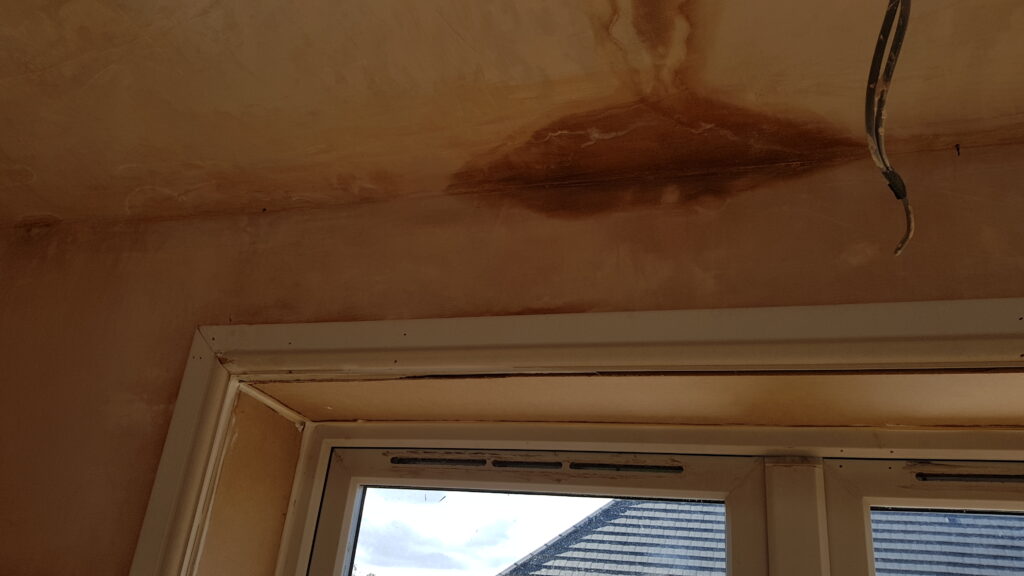
Roof leak repairs
Roof Leak Repairs in Edinburgh
Water showing on a ceiling is rarely coming in directly above it. We trace a roof leak back to where it starts, make it safe and repair the cause, not just the stain.
- Leaks traced to the source
- Tenements, houses & commercial
- Photos of what we find
- Fully insured
Finding the source
Why a roof leak is hard to find
Water rarely drips straight down. It runs along the sarking, down rafters and along wall heads before it shows on a ceiling or wall, sometimes several metres from where it gets in. On a tenement, a stain in a top-floor flat can start at a rone, a valley or a chimney head on the other side of the roof.
That is why patching the slates above the stain often does not work. We inspect the roof close up, find the point where water is actually getting in, and show you photos of it before any repair is priced. Historic Environment Scotland’s maintenance guidance explains what owners can safely check themselves.
Common causes
Where roof leaks usually start
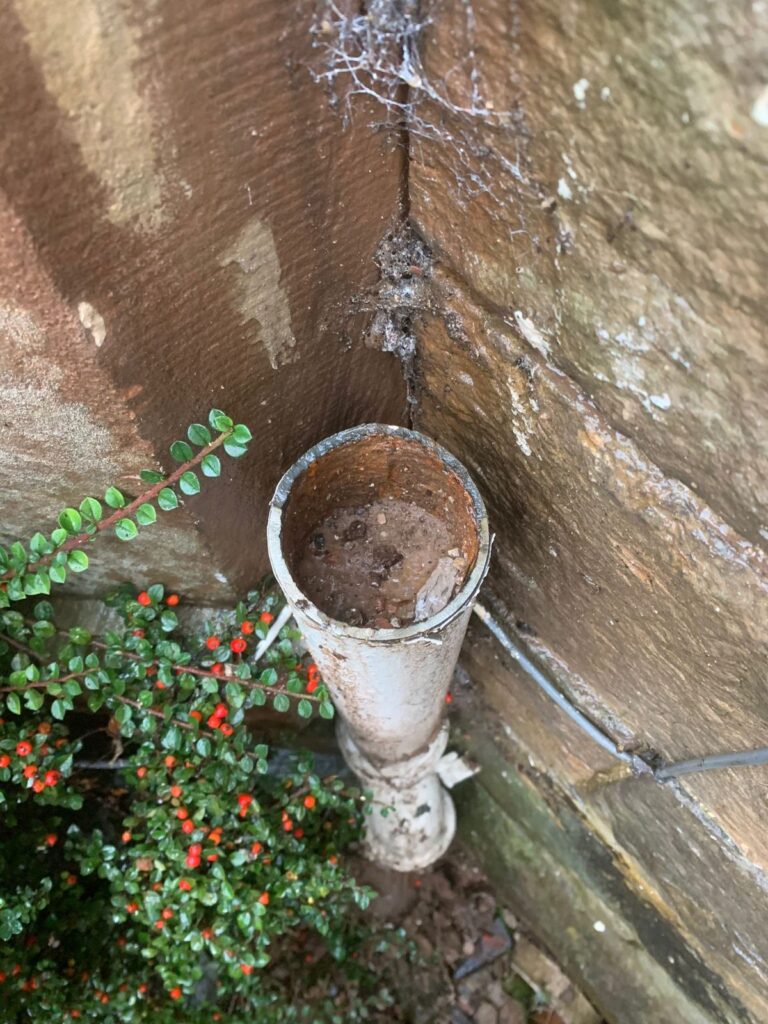
Rones and outlets
Leaves, moss and plants block rones and outlets, so water backs up under the slates or spills over the wall head.
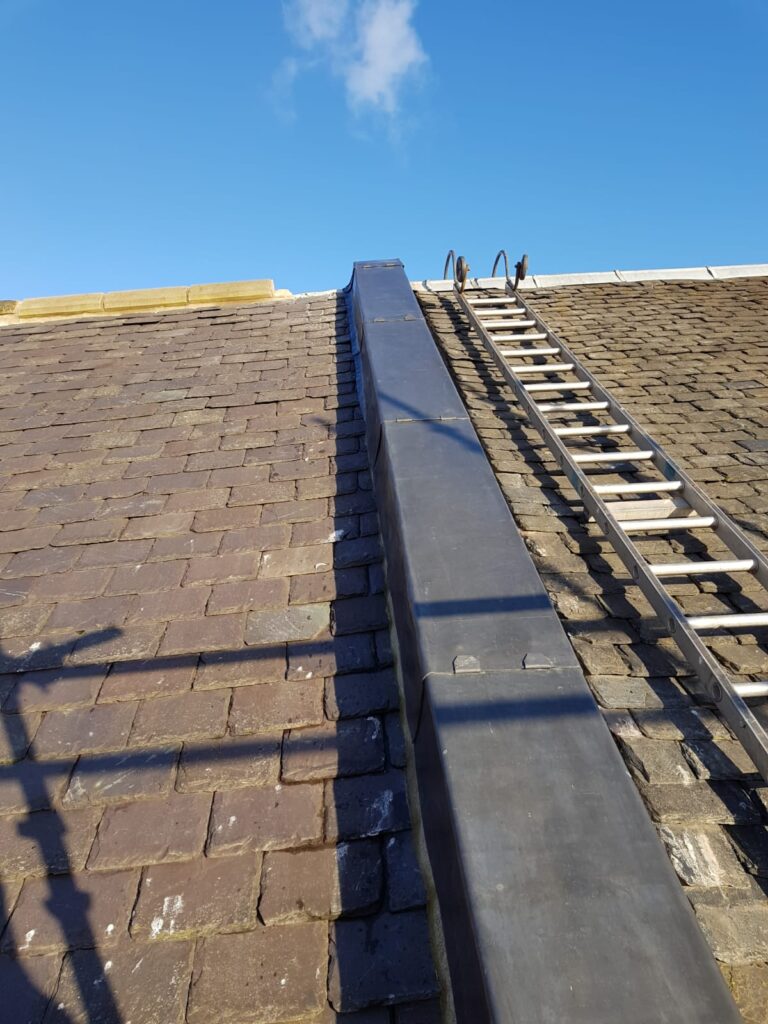
Valleys and wall abutments
Split or worn lead in a valley, or cracked haunching where the roof meets a wall, lets water straight onto the sarking.
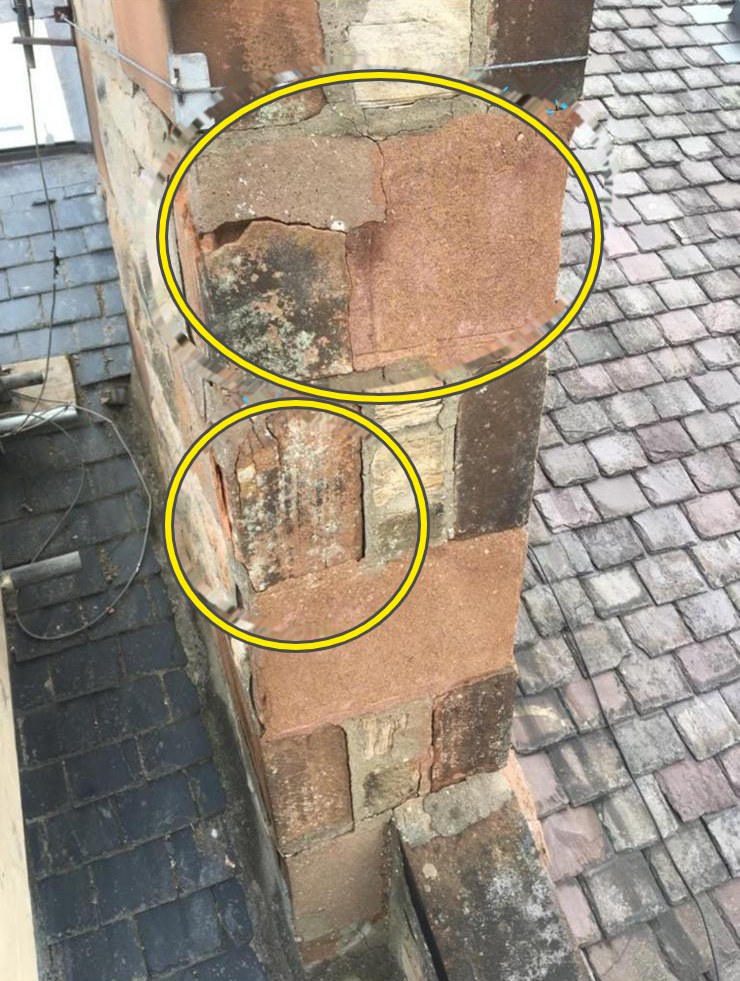
Chimney heads
Failed haunching, loose flashings and open joints on chimney stacks are a common cause of top-floor leaks.
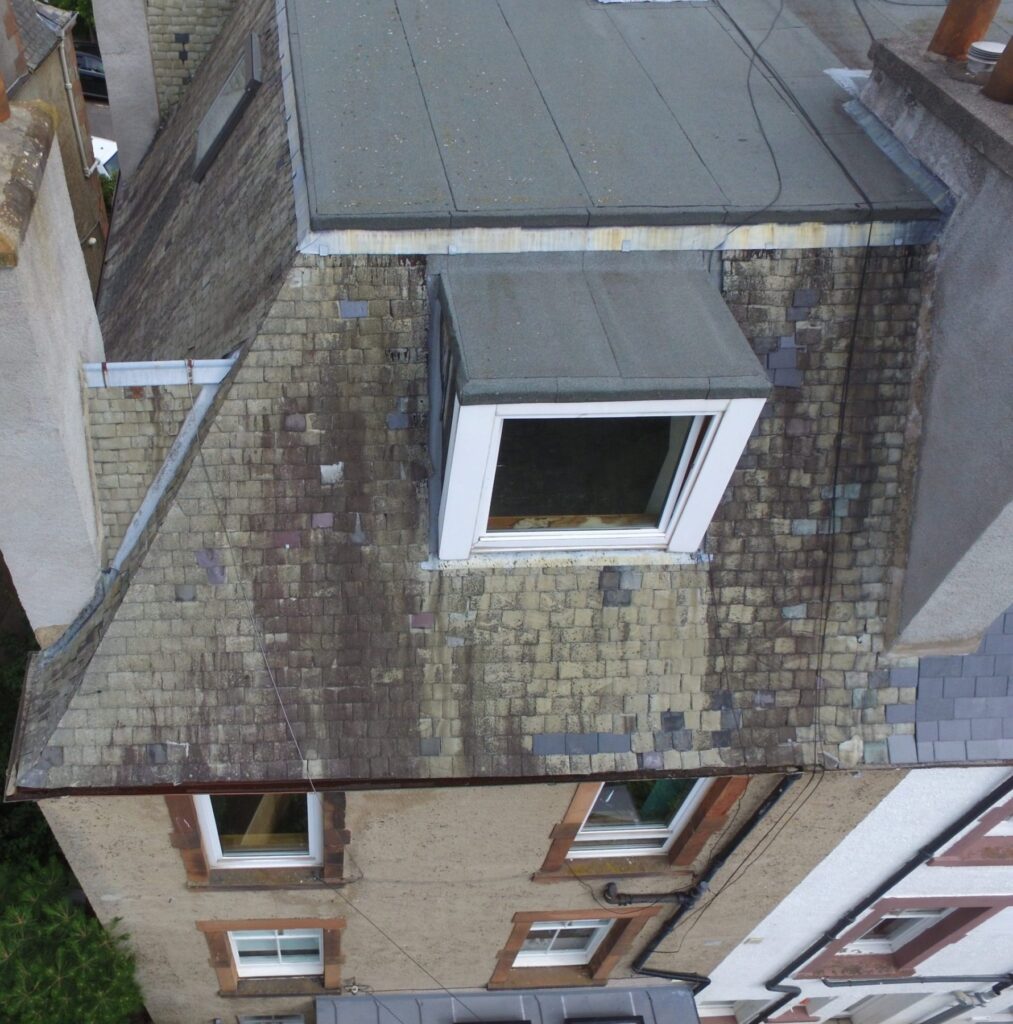
Slipped and broken slates
One slipped or cracked slate exposes the felt and boards below it. In wind-driven rain that is enough to let water in.
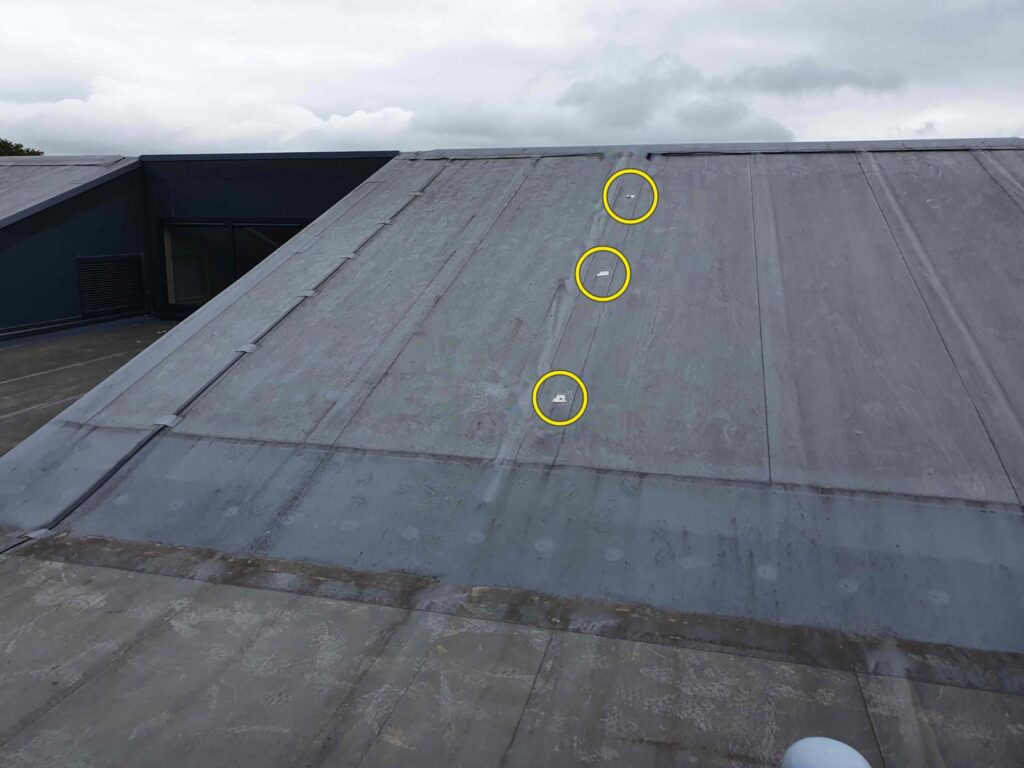
Flat roofs and roof lights
Splits, blisters and failed upstands on flat roofs, and worn seals round roof lights and hatches.
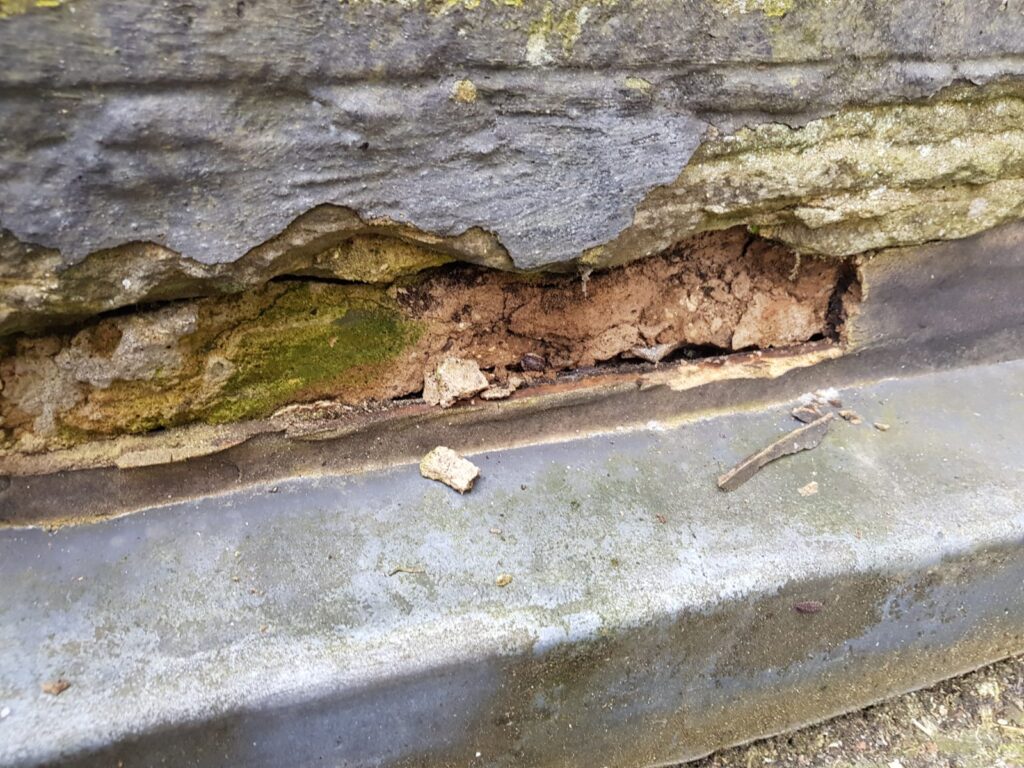
Wall heads and parapets
Open joints in cope stones and parapets let water run down inside the wall, where it can go unnoticed until the timber rots.
How it works
How our roof leak repairs work
- Send us the details. The address, where the water is showing inside, when it happens (heavy rain, wind from one direction, all the time) and any photos.
- Close inspection. We look at the roof up close, using whichever access is most cost-effective for the building: ladders, rope access, a platform or scaffold.
- Make it safe. If water is still getting in, we make it safe first so the damage inside does not get worse.
- A priced repair. You get photos of the cause and a quote, with what needs doing now and what can wait. Quotes are valid for 30 days.
- The repair. We fix the cause and send photos of the finished work.
Before you call
Roof leak, condensation or an overflowing rone?
Not every damp patch is a roof leak. A few things help us narrow it down:
- If it only appears after rain, and worse in wind from one direction, it is usually a roof or wall defect.
- If it appears in cold weather without rain, especially on ceilings in bathrooms and kitchens, condensation is more likely.
- If water runs down the outside of the wall, check the rone and downpipe for a blockage first.
If you are not sure, send us photos of the damp patch and the roof above it, and we will tell you what we think before anyone visits.
Roof leak questions
How do you find a roof leak?
We start from where the water is showing inside and work back across the roof: slates, lead, flashings, rones and wall heads. On larger or higher roofs a close-up inspection by rope access or from a platform finds defects that cannot be seen from the ground.
How much does it cost to fix a roof leak?
It depends on the cause and how the roof is reached. A blocked outlet or a slipped slate is a small job; failed leadwork or a chimney head is more. We inspect first and give a fixed quote, valid for 30 days.
Who pays for a roof leak in a tenement?
In most tenements the roof is shared, and repair costs are split between the owners under the title deeds or the Tenement Management Scheme. A factor usually arranges the work; where there is no factor, one owner can organise it with the others’ agreement. Under One Roof has free, impartial guidance on organising common repairs.
Can a leak be fixed in winter?
Yes. Most leak repairs can be done in winter, weather permitting. Some work, such as lime mortar and some flat roof materials, needs dry and frost-free days, so a temporary repair may come first.
Water coming in?
Send us the address, where the water is showing inside and any photos. We cover Edinburgh and the surrounding areas.