

Project
Stopping water ingress at a shared chimney wall
Water ingress at the junction of a chimney stack and an adjoining wall was causing damage to a neighbouring property. Failed masonry, pointing and leadwork were identified and repaired.
- Property factor
- Masonry and leadwork
- Gutters
- 8 days
Project summary
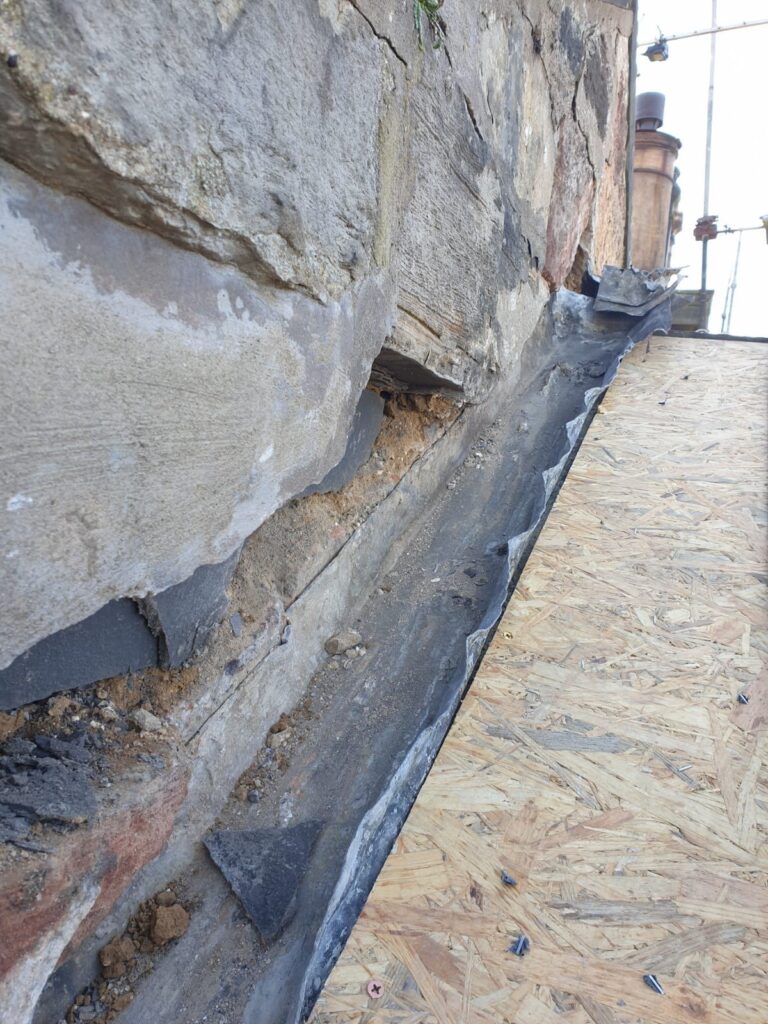
The property factor instructed an inspection after water ingress was reported in the neighbouring property. The inspection found failed stonework and pointing on the chimney and shared wall, and defective lead flashings at the junction.
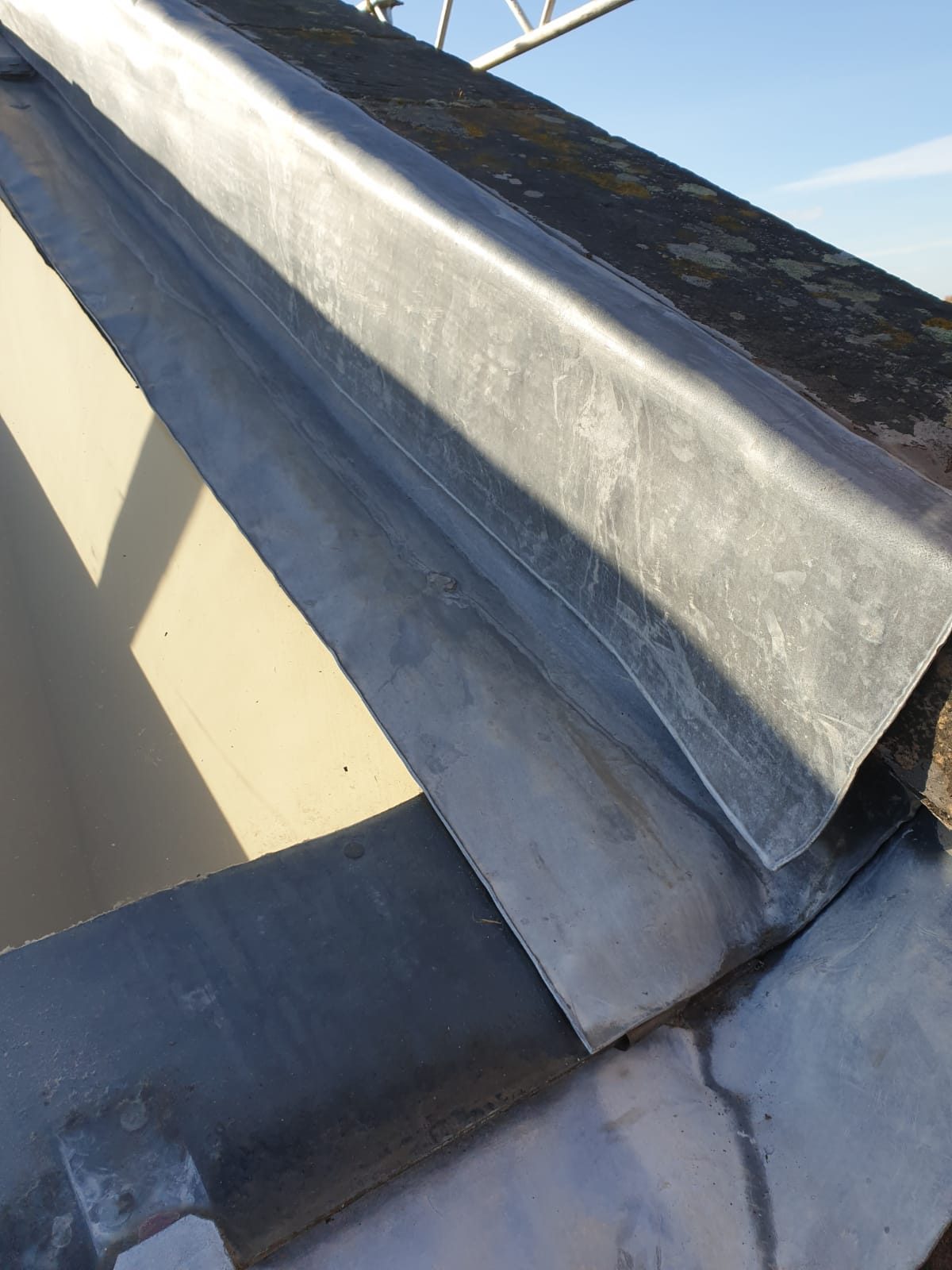
The leadwork was stripped out, failed masonry removed and replaced, and the wall repointed where required. New leadwork was then installed and dressed, and the gutters cleaned and resealed.
- Location
- Edinburgh
- Client
- Property factor
- Problem
- Water ingress into a neighbouring property
- Cause
- Failed masonry, pointing and leadwork on a shared wall
- Work
- Masonry, pointing, leadwork, gutters
- On site
- 8 days
- Guarantee
- Workmanship guarantee as stated on the quote
What caused the water ingress
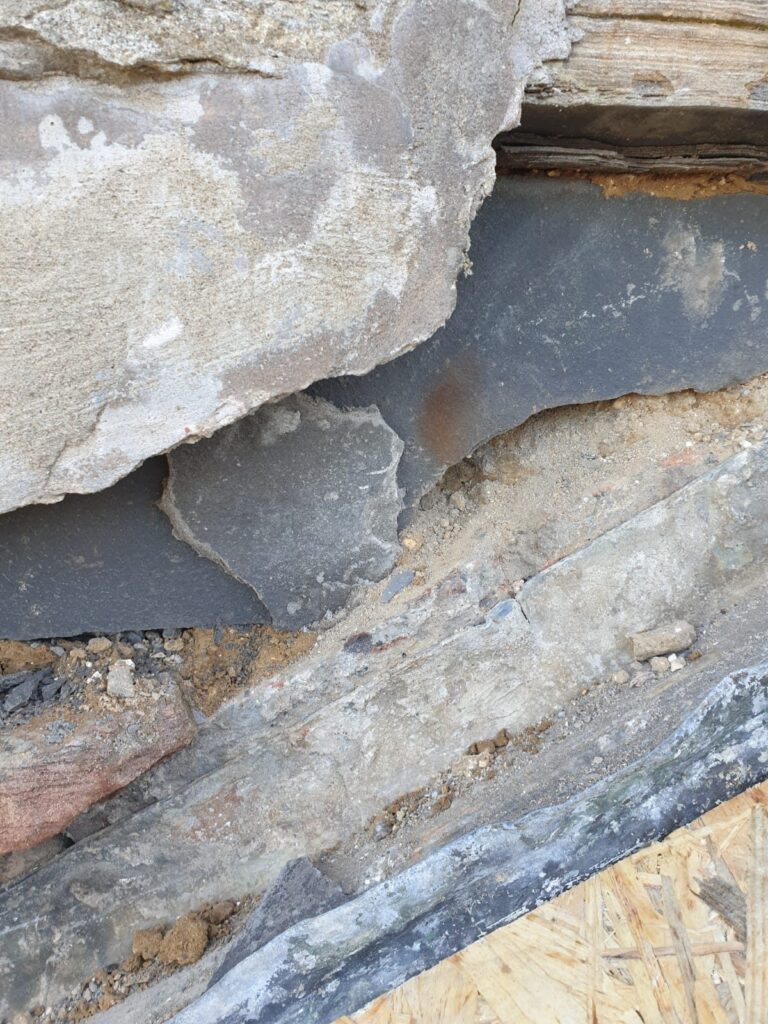
- Failed and weathered stone to the chimney and shared wall
- Open and failed pointing
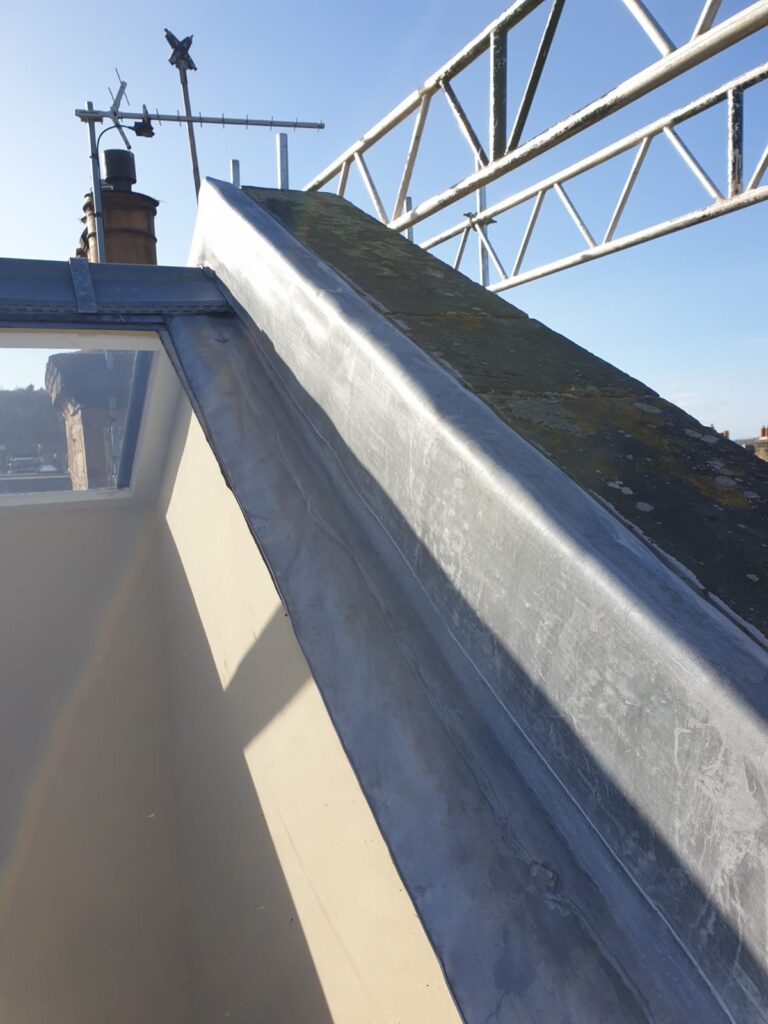
- Defective lead flashings at the chimney and wall junction
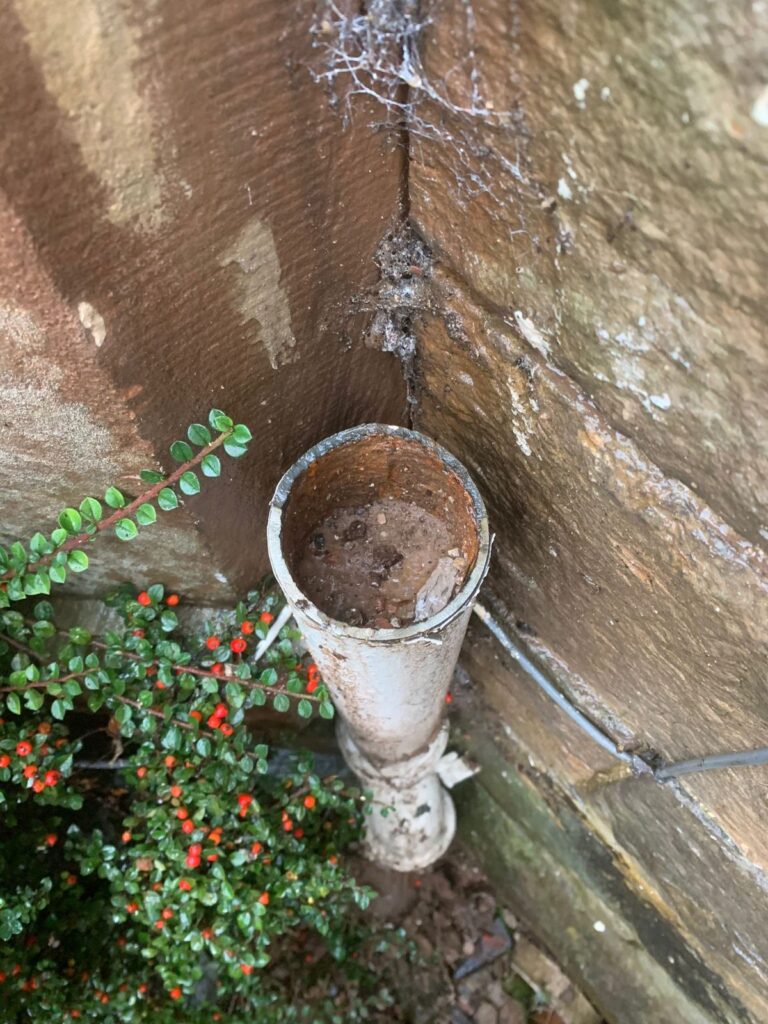
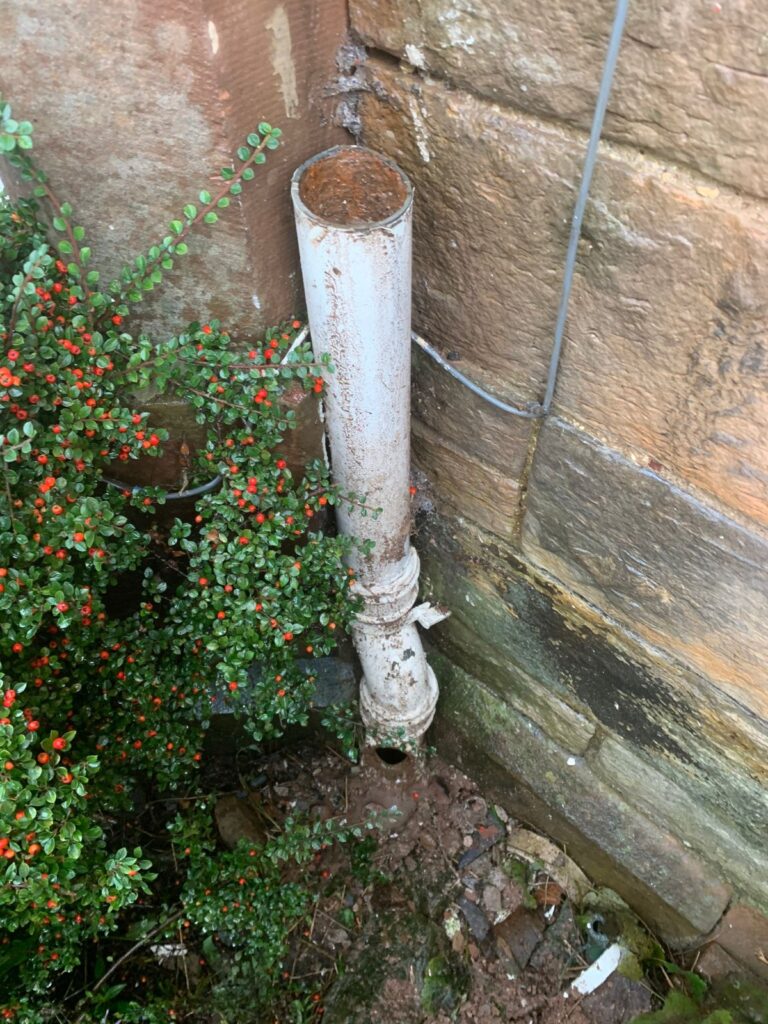
- Gutters requiring cleaning and resealing
As the defects were interrelated, they were repaired as a single scope of work.
The work
Strip out
Existing leadwork at the junction removed.
Masonry
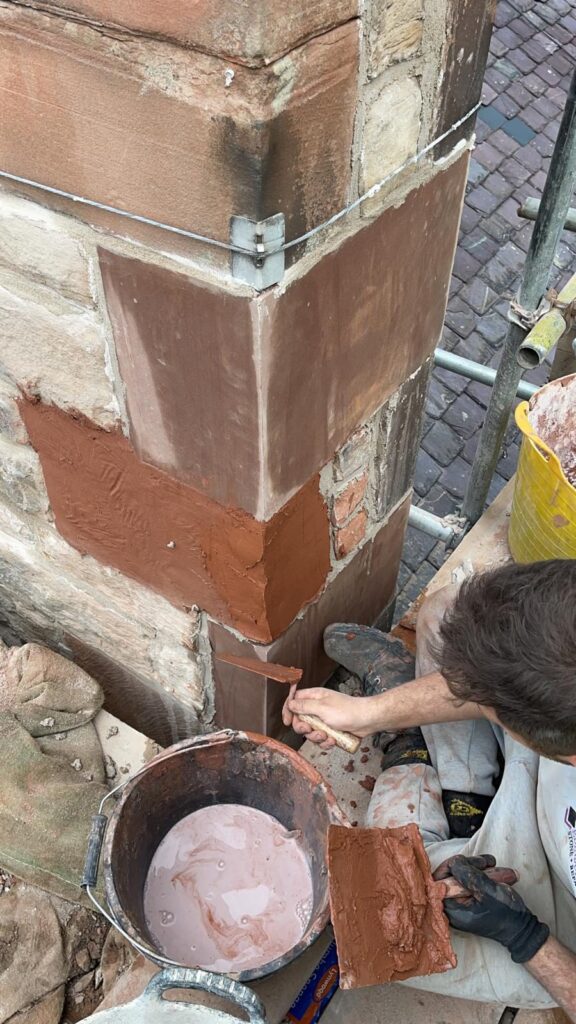
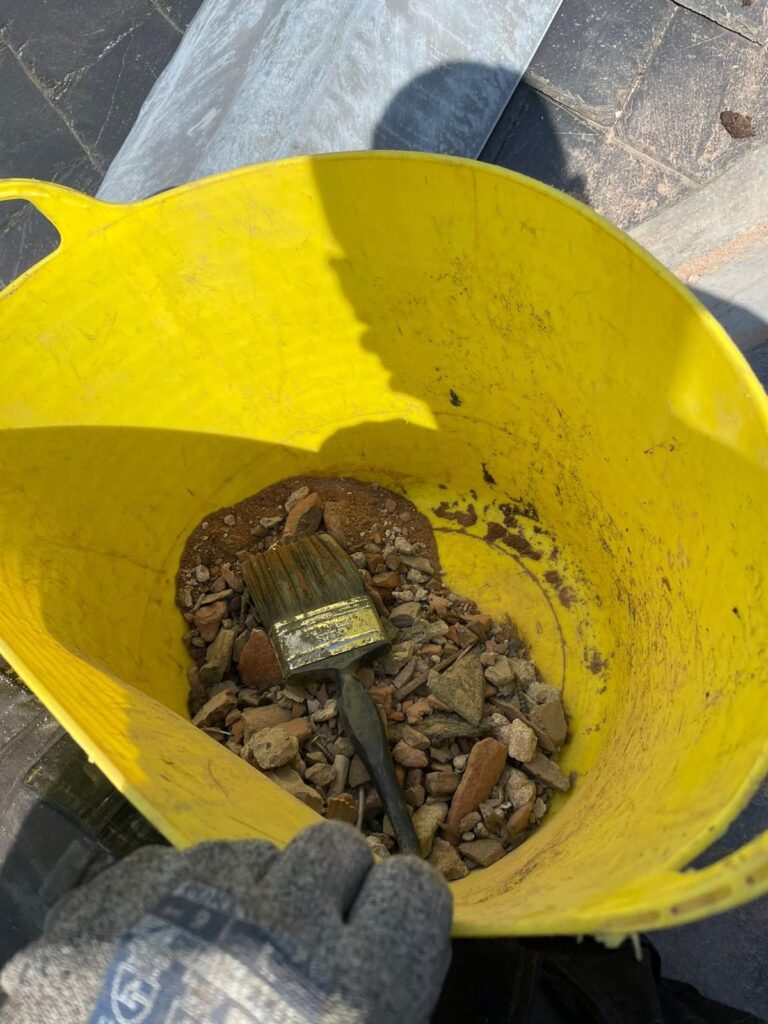
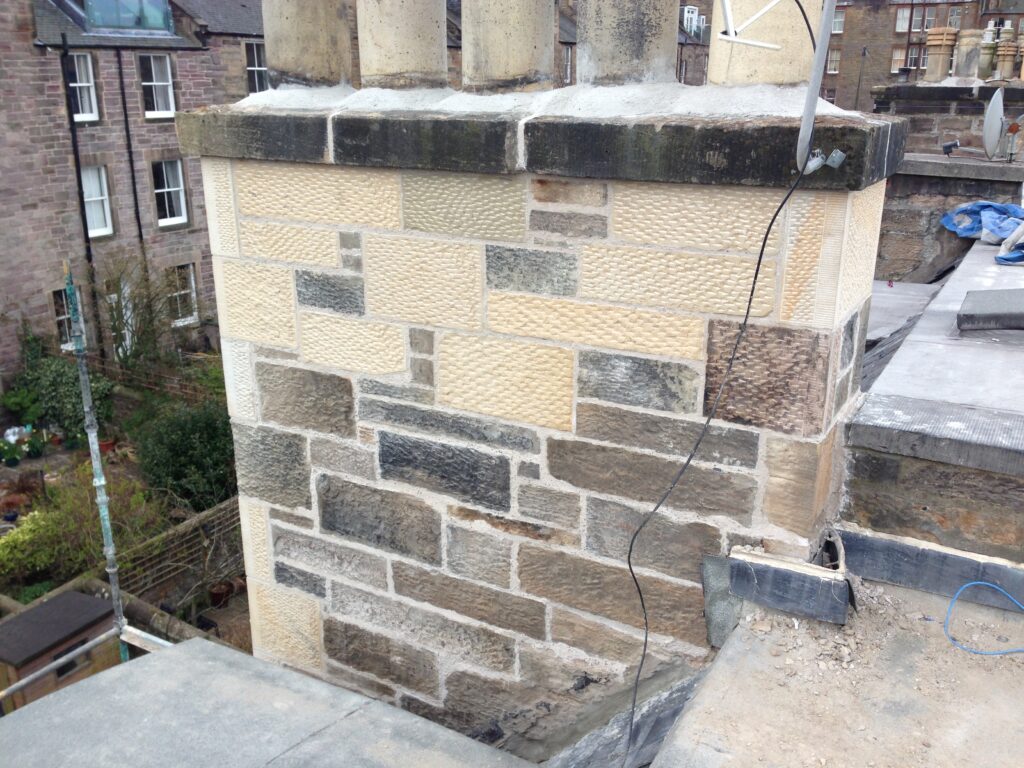
Failed stone replaced and joints repointed where required.
Leadwork
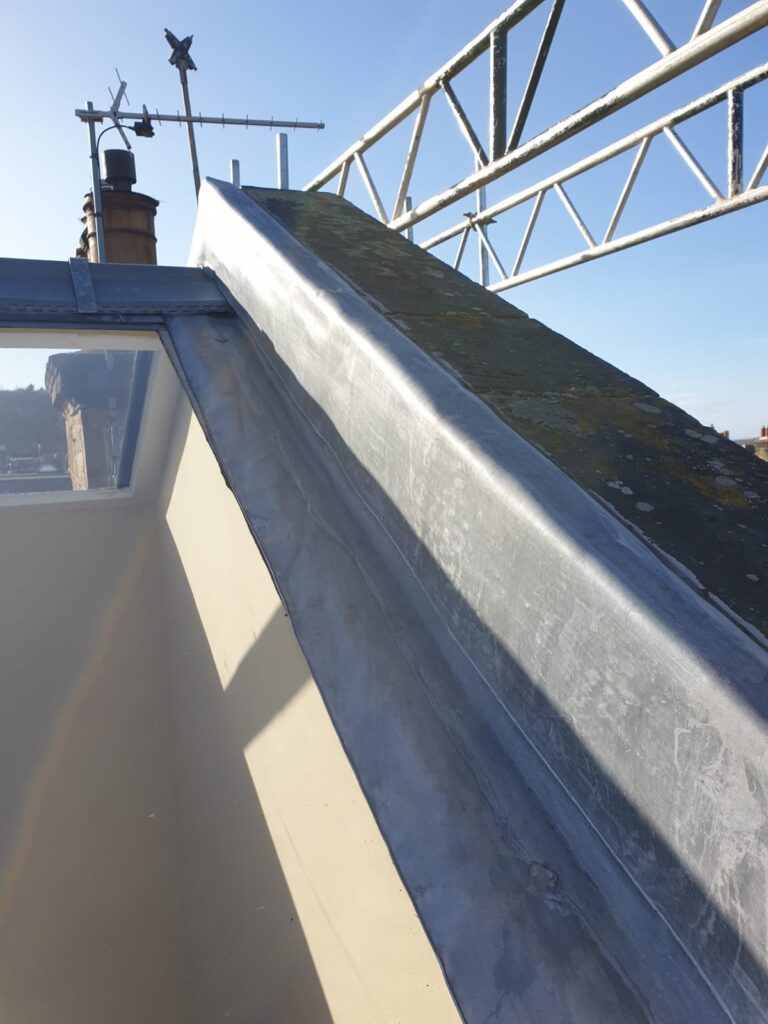
New lead flashings installed and dressed.
Gutters
Gutters cleaned and resealed.
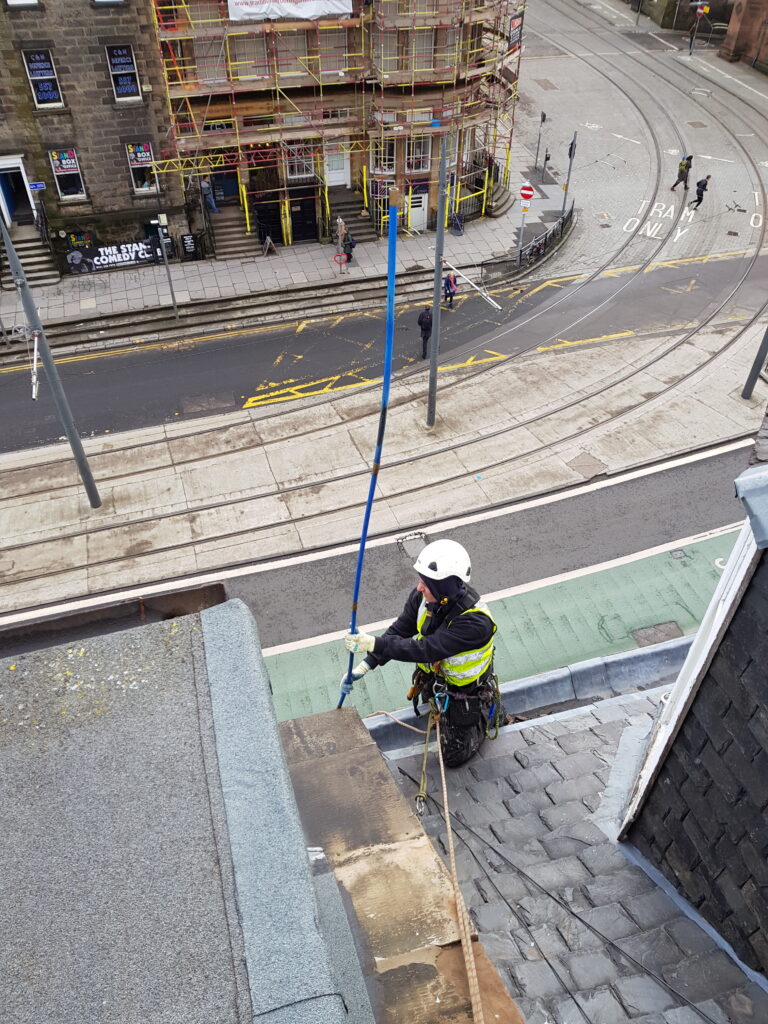
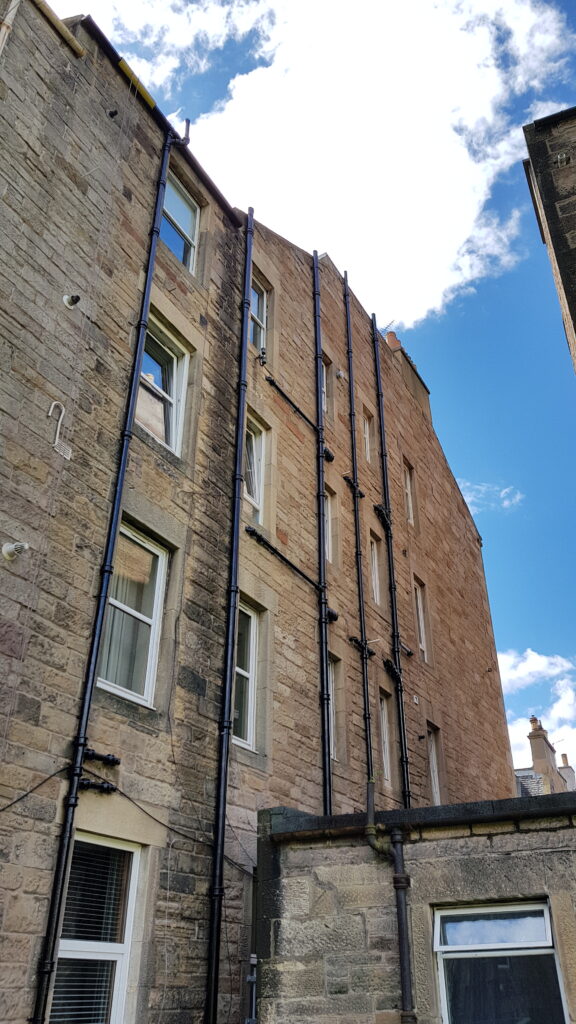
Before and after
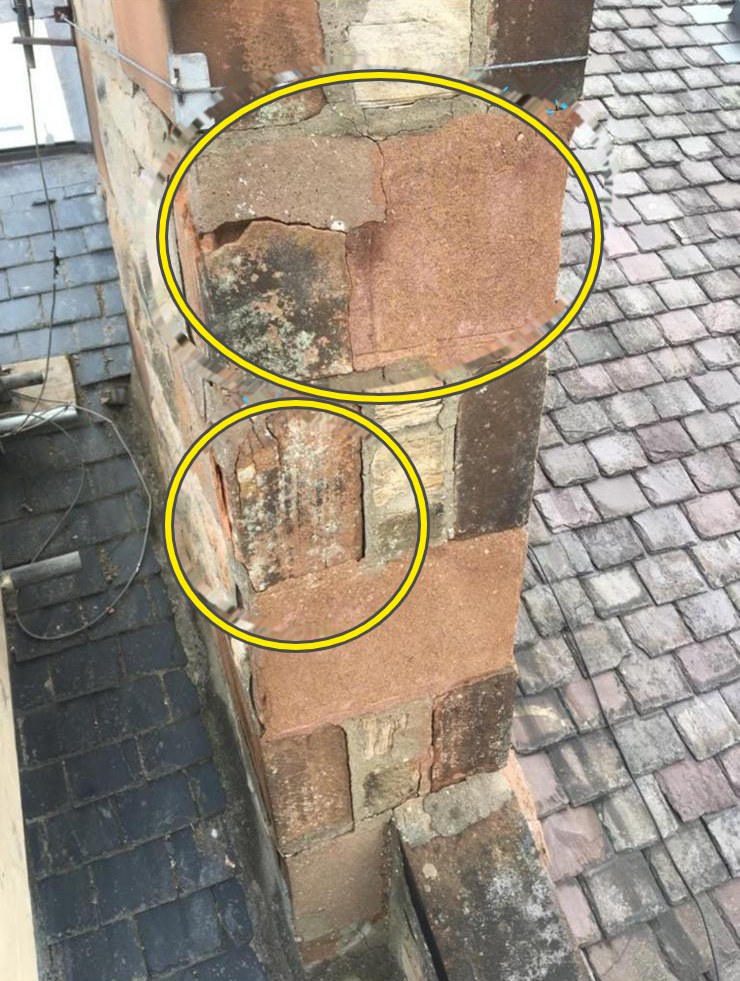
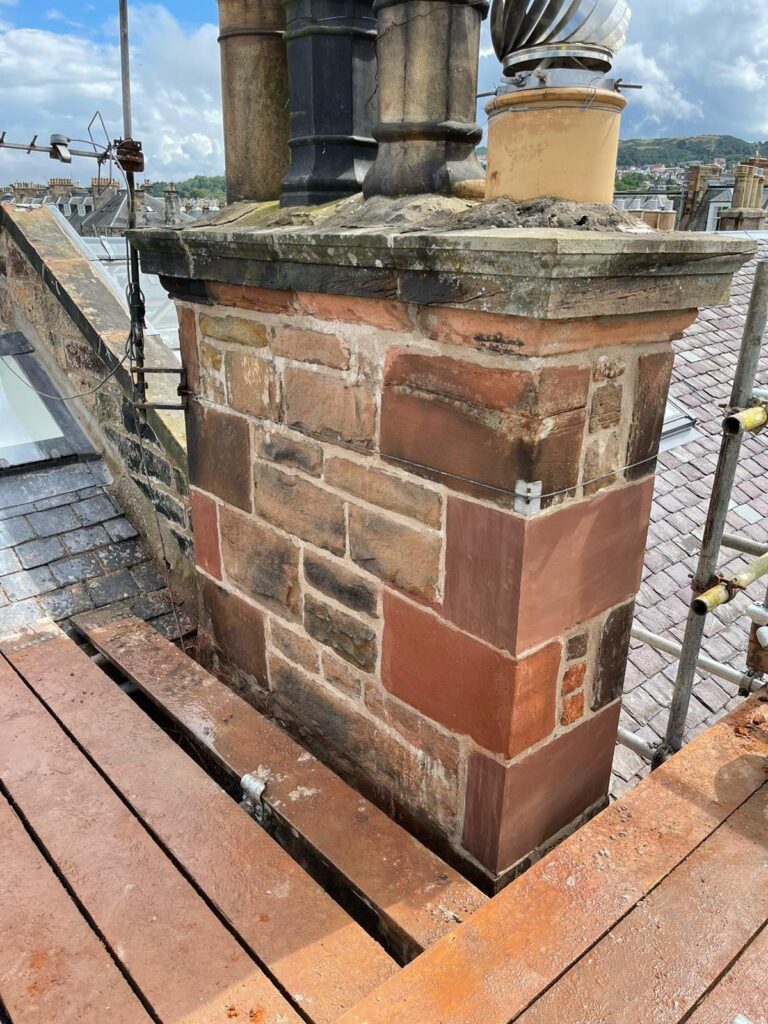
Photos from the job
Result
- Masonry, pointing and leadwork renewed at the shared wall
- Gutters cleaned and resealed
- Completed in eight days on site
Common causes of water ingress at chimneys
Chimneys are one of the most common places for water ingress on traditional Edinburgh buildings. The usual causes are lead flashings that have split, lifted or slipped; open or eroded pointing; weathered or cracked stone; and cement fillets or render used in place of proper leadwork.
Water often travels some distance before it shows inside, so damp in one property can come from a stack or wall shared with the building next door, as it did here.
Because these defects tend to appear together, repairing only the most visible one rarely stops the leak. Inspecting the stack, the leadwork and the adjoining wall as one job is what identifies the route the water is actually taking.
On this job the repair was carried out as a single scope: the failed leadwork was stripped out, the masonry replaced and repointed, then new leadwork was installed and dressed in. Doing the work in that order means the new lead is fixed into sound stone and fresh joints, not into the masonry that was letting the water in.
The gutters were cleaned and resealed at the same time, so water coming off the roof has a clear route away from the wall.
Historic Environment Scotland publishes guidance on maintaining traditional buildings, including chimney stacks.
Related services
Water getting in at a chimney or shared wall?
Send us the address and a description of the problem. Factors can include access details and we will arrange an inspection.