Commercial Rope Access Services in Edinburgh
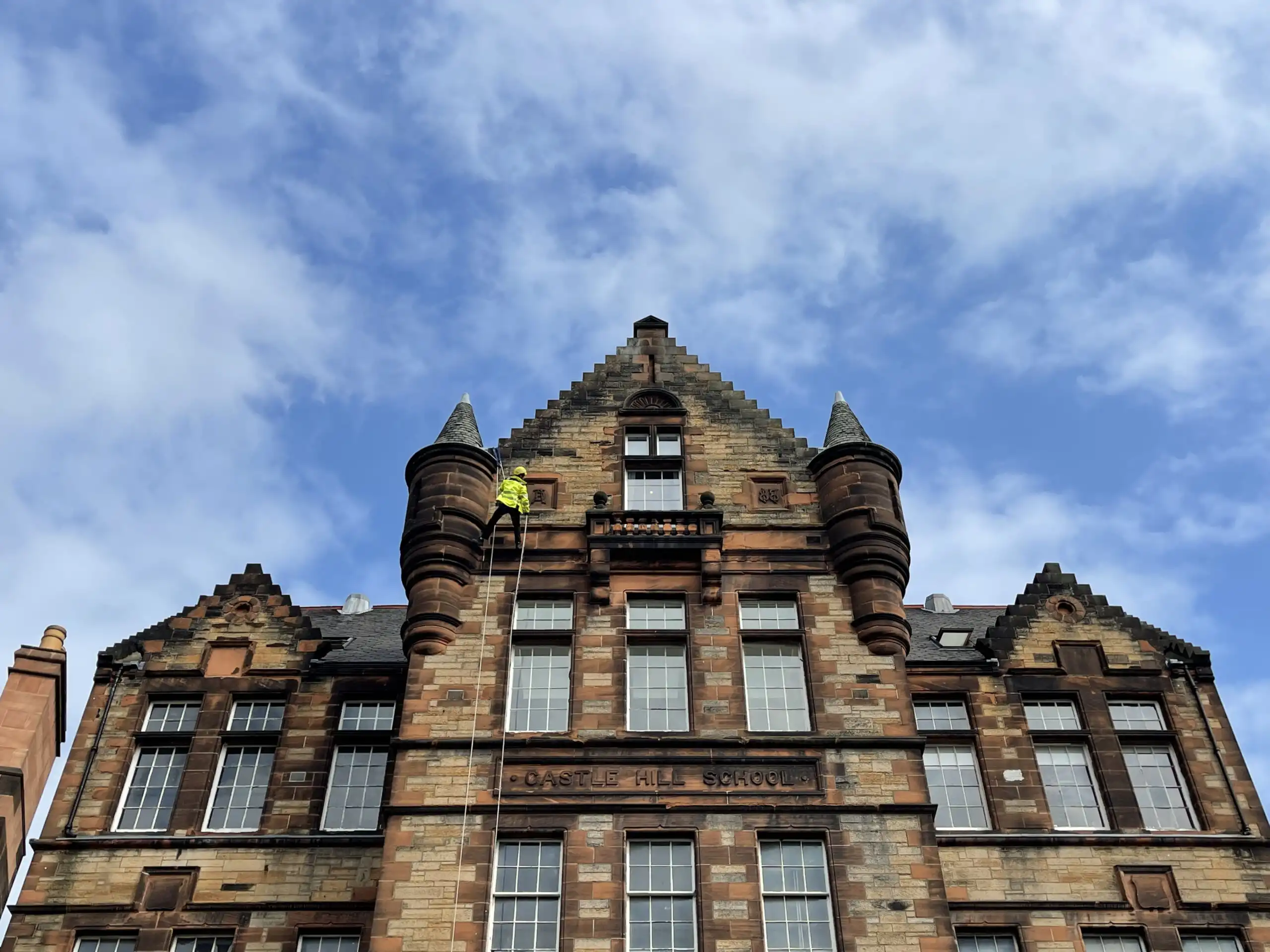
Rope Access Edinburgh

Commercial Rope Access for Difficult Building Access

Valtor Roofing provides commercial rope access services Edinburgh businesses can use for difficult-access inspections, maintenance, repairs and make-safe works.
We support commercial property owners, facilities managers, property factors, contractors and maintenance teams with difficult-access inspections, repairs and building maintenance. Our work covers façades, cladding, HVAC ducting, wall penetrations, glazing interfaces, signage, lighting, roof plant areas and internal high-level areas

Key Benefits:

  • Reduced scaffold costs
  • Faster access to difficult areas
  • Less disruption to tenants and building users
  • Targeted access for localised repairs
  • Less disruption to access and trading areas
  • Useful for urgent inspections and make-safe works
  • Less disruption to tenants and building users
  • Suitable for occupied commercial buildings
Rope access is suitable for commercial inspections, localised repairs, high-level maintenance and urgent make-safe works where full scaffold would be excessive. It is particularly useful on occupied buildings, restricted elevations, rear courtyards, roof plant areas and internal high-level spaces.

Commercial Rope Access Services We Offer
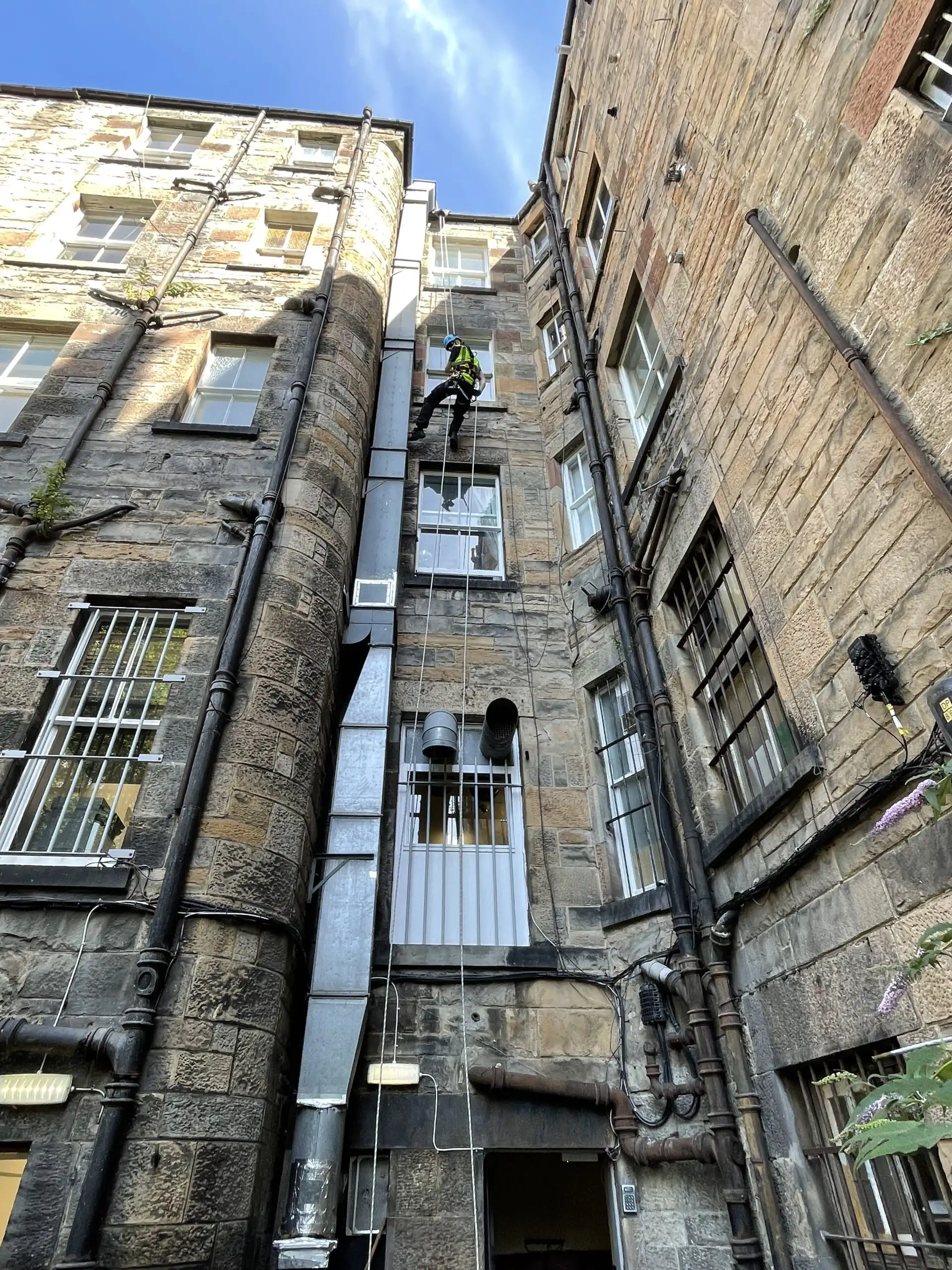
Commercial Rope Access Services Edinburgh

Ducting, Ventilation and Mechanical Access Support
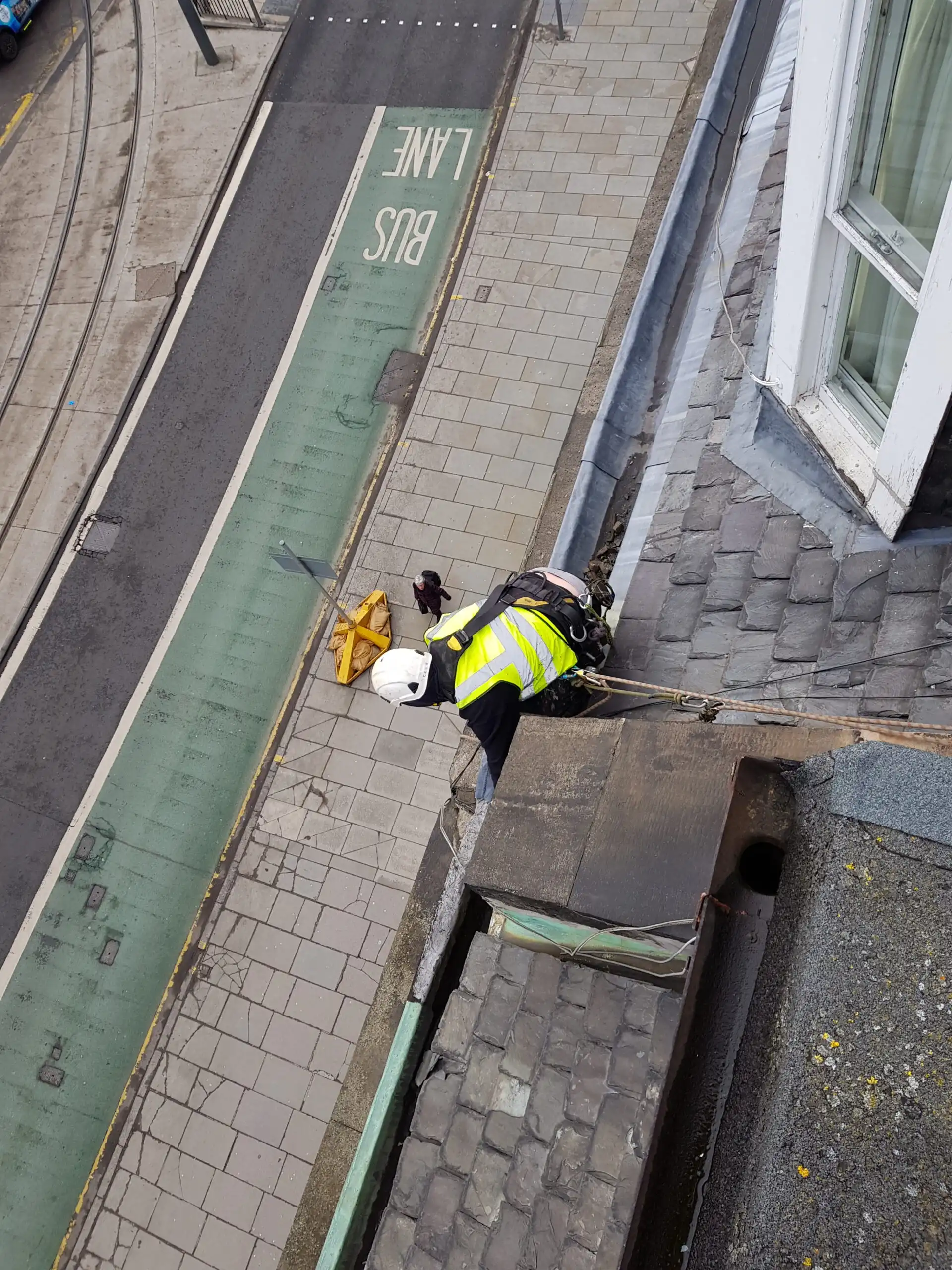
Rope access can support works around external HVAC ducting, ventilation systems and high-level mechanical service routes. This is useful where ducting is located on rear elevations, roof plant areas, external walls or restricted service zones.
We can assist with access for inspection, sealing, weatherproofing and localised building fabric works around ducting and ventilation routes.
  • External duct route inspections
  • Access to high-level vents and louvres
  • Sealing around duct penetrations
  • Support for mechanical contractors
  • Duct cleaning
Rope access wall penetrations

Service Penetration Sealing and Weatherproofings
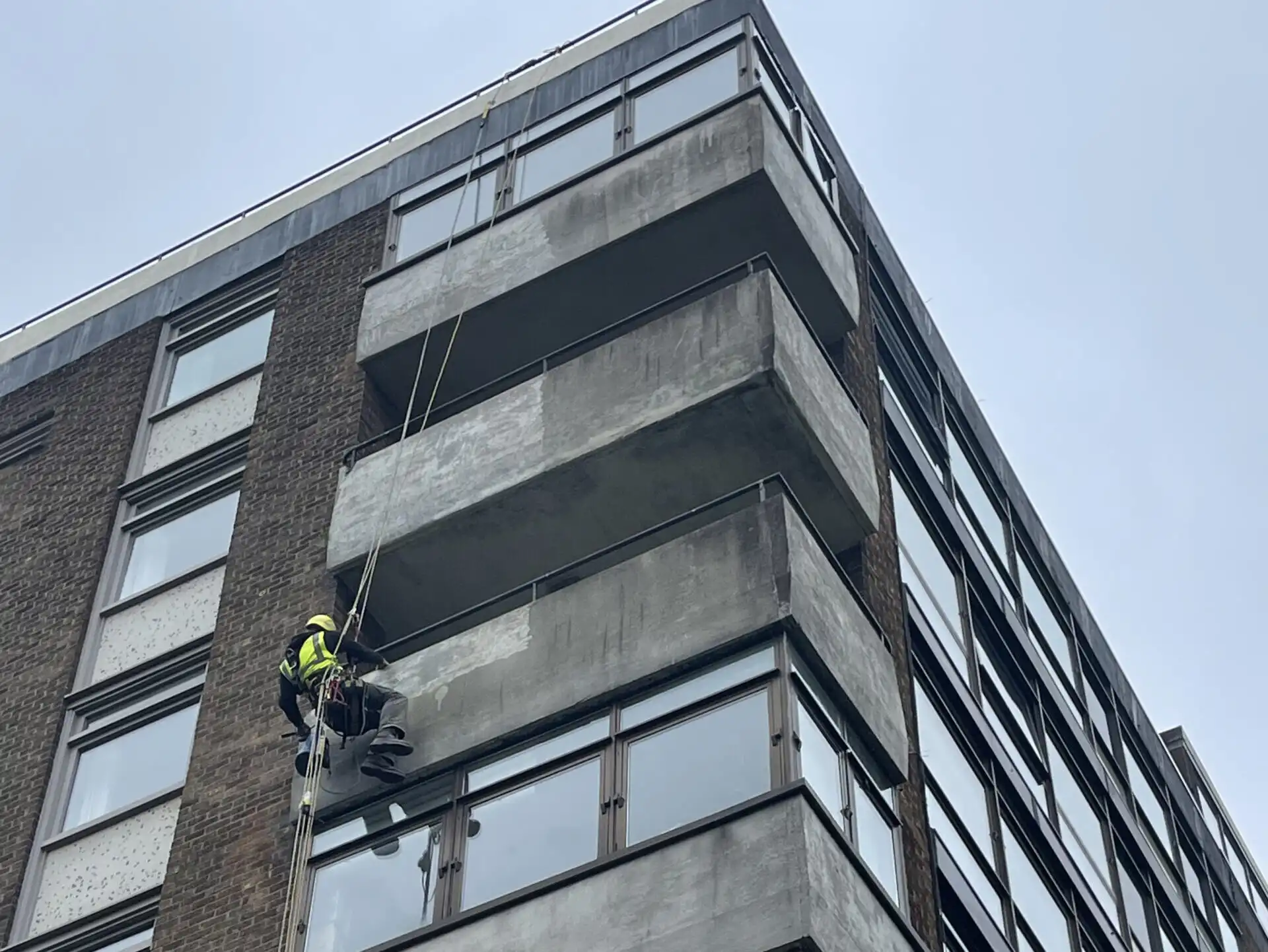
Poorly sealed wall penetrations are a common cause of water ingress. Small gaps around pipework, ducting, vents, cables or service openings can allow moisture into the building fabric, leading to staining, damp, internal damage and deterioration around the opening.
Rope access allows these areas to be inspected, sealed and repaired without installing scaffold for a small but important defect.
  • Inspection of high-level service penetrations
  • Sealing around ducts, vents, pipes and cables
  • High-level visual inspections
  • Support for mechanical contractors
rope access cleaning Edinburgh

High-Level Commercial & Industrial Access

Commercial and light industrial buildings often have areas that are difficult to reach using ladders, towers or MEWPs. Rope access can provide safe, controlled access to high-level areas without disrupting normal building operations.
This is useful for warehouses, plant rooms, atriums, service yards, loading bays, roof plant areas and large commercial spaces where scaffold would be excessive or obstructive.
  • Warehouse high-level access
  • Roof plant maintenance support
  • Hight-level construction support
  • High-level lighting checks
  • High-level cable pulling support
rope access cleaning Edinburgh

High-Level Façade Inspection and Repair

External defects on commercial buildings can quickly lead to water ingress, staining, loose materials and disruption for tenants or building users. Small issues at height are often easy to ignore until they become more expensive to access and repair.
Rope access allows close-range inspection and repair of façade defects without enclosing the full elevation in scaffold.
  • Façade condition inspections
  • High-level external repairs
  • Leak source investigations 
  • Vegetation and debris removal
  • Cladding defect checks
rope access cleaning Edinburgh

Targeted Leak Prevention at Height

Failed sealant is one of the most common causes of water ingress on commercial buildings. It often fails around cladding joints, wall penetrations, glazing interfaces, vents, flashings and material junctions. Once these areas open up, water can track behind the external surface and cause staining, damp, internal leaks and damage to finishes.
Rope access allows targeted sealant, mastic and waterproofing works to be carried out without installing scaffold for a relatively small defect. This is particularly useful on occupied commercial buildings, rear elevations, roof plant areas and high-level façades where access is difficult or disruptive.
  • Failed sealant removal
  • Replacement mastic works
  • Trim and flashing inspections
  • Failed sealant replacement
  • Flashing and vent sealing
rope access cleaning Edinburgh

Rooflight, Atrium and Glazing Access

High-level glazing, rooflights and atrium areas can be difficult to inspect and maintain using standard access methods. Problems often develop around perimeter seals, drainage points, fixings and junctions with the surrounding structure. These defects can lead to leaks, staining, condensation issues and damage to internal finishes.


High-level glazing, rooflights and atrium areas can be difficult to inspect and maintain using standard access methods. Problems often develop around perimeter seals, drainage points, fixings and junctions with the surrounding structure. These defects can lead to leaks, staining, condensation issues and damage to internal finishes. Rope access provides close-range access where ladders, towers or MEWPs are restricted by height, layout, fragile surfaces or building use. It is particularly useful for occupied offices, hotels, retail units, atriums, stairwells and commercial buildings where internal disruption needs to be controlled.
  • Atrium glazing access
  • Access support for glaziers
  • Frame and fixing inspections
  • High-level condition reporting
  • Drainage channel checks

What Is Commercial Rope Access?

Commercial rope access is a controlled method of working at height where trained technicians use rope systems to reach difficult areas without scaffold, towers or powered access equipment.

For commercial buildings, the value is speed, precision and reduced disruption. It allows specific defects to be inspected, repaired or made safe without enclosing the full elevation or blocking large areas of the site.

Rope access is commonly used for façade repairs, roof plant areas, wall penetrations, HVAC ducting, high-level glazing, building inspections, drainage issues and reactive make-safe works.

It is not the right answer for every job. Large-scale replacement works, heavy materials or long-duration projects may still require scaffold. The access method should be selected around the task, building layout, site restrictions and safety requirements.

Rope access is particularly useful for:

Why Commercial Rope Access Is Perfect for Edinburgh

Commercial buildings in Edinburgh often present awkward access conditions. Narrow streets, public footpaths, rear elevations, internal courtyards, occupied premises and heritage constraints can make scaffolding slow, costly or disruptive.
Rope access can be a better option for targeted work. It allows technicians to reach the defect directly without turning a small inspection or repair into a major access project.
  • Occupied commercial buildings
  • Hotels, offices and retail units
  • Managed residential blocks
  • Commercial courtyards and rear elevations
  • Roof plant and service areas
  • Traditional Edinburgh buildings
  • Light industrial units
  • High-level areas where MEWPs are restricted

Commercial, Industrial and Infrastructure Rope Access Support

Commercial rope access services are not limited to external building repairs. Rope access can also support trade access, inspection, maintenance and make-safe works across commercial properties, light industrial sites and infrastructure locations where scaffold or MEWPs are not practical.

Commercial Building Access and Maintenance

Commercial rope access is suited to occupied buildings where disruption, access restrictions and public interface need to be controlled. It allows targeted inspection, maintenance and repair works to be completed without enclosing the full elevation in scaffold.
Rope access provides controlled, targeted access for inspection, maintenance and contractor support where disruption, access time or temporary works need to be kept under control.
Typical infrastructure applications include:
  • Offices, hotels and retail units
  • Managed residential blocks
  • Commercial courtyards and rear elevations
  • Roof plant and service areas

  • HVAC ducting and wall penetrations
  • Façade, roof edge and parapet inspections
  • Glazing, rooflight and atrium access

  • Reactive make-safe works

Industrial Access, Maintenance and Trade Support

Industrial rope access can support high-level and restricted-access work in warehouses, plant rooms, service yards, production areas, tanks, silos and confined spaces. It is useful where scaffold would obstruct operations, where MEWPs are restricted by layout, or where the work area is difficult to reach safely by conventional access methods.
Rope access can be used to support inspections, maintenance, mechanical works, cable pulling, ducting routes and access into or around industrial structures. For tanks, silos and confined spaces, the scope must be planned around entry requirements, rescue arrangements, ventilation, isolation and site-specific controls.
Typical Industrial applications include:
  • Warehouse and plant room inspections
  • Tank and silo access
  • Confined space access support
  • High-level cable pulling
  • Mechanical trade support
  • Ducting and service route access
  • Lighting and fixture maintenance
  • Restricted-area inspections

Infrastructure Inspection and Access Support

Infrastructure assets often include areas that are difficult to inspect, maintain or make safe using conventional access methods. Bridges, gantries, retaining walls, service routes and external structures can be restricted by height, water, traffic, public access, ground conditions or limited space for scaffold and MEWPs.
Rope access provides controlled access for inspections, maintenance and contractor support where temporary works need to be kept proportionate and disruption needs to be controlled.
Typical Industrial applications include:
  • Bridge access and inspections
  • Gantry and steelwork access
  • Retaining wall inspections
  • Drainage and service route access

  • Photo-supported condition reporting
  • High-level defect checks
  • Loose material make-safe works
  • Contractor access support

Commercial Rope Access FAQs

Commercial rope access services use trained rope access technicians to inspect, maintain, repair or make safe difficult-access areas of commercial buildings. Commercial rope access services Edinburgh clients typically request include façade access, HVAC ducting support, wall penetration sealing, glazing checks, roof plant access, building inspections and reactive make-safe works.
Yes. Rope access is often suitable for Edinburgh commercial buildings where scaffolding is difficult, disruptive or excessive for the work required. It can be used on offices, hotels, retail units, managed residential blocks, commercial courtyards, roof plant areas and restricted rear elevations.
Rope access is usually better than scaffolding when the work is targeted, short-duration or difficult to reach with standard access methods. It is useful for inspections, localised repairs, leak investigation, wall penetrations, roof plant areas, glazing access and reactive make-safe works.
Yes. Rope access can provide access around HVAC ducting, ventilation routes, wall penetrations, brackets, vents and external service runs. It can also support mechanical contractors where high-level access is required. Specialist HVAC installation should still be completed by the relevant mechanical contractor where required.

Yes. Rope access can be used to inspect, seal and weatherproof high-level wall penetrations for ducting, pipework, vents, cables and other services. It is also useful for failed sealant, mastic replacement, cladding interfaces, vents, flashings and other common water ingress points.

Yes. Rope access can support commercial, industrial and infrastructure sites where access is restricted by height, layout, machinery, traffic, public areas or limited space for scaffold. This may include warehouses, plant rooms, tanks, silos, confined spaces, bridges, gantries, retaining walls and service routes.

Yes. Rope access can be used to inspect rooflights, atrium glazing, frames, fixings and drainage areas. Where specialist glass replacement is required, a glazing contractor should complete the replacement, with rope access used to support safe access where suitable.
Yes. Rope access can be used for close-range commercial building inspections, including façades, roof edges, parapets, cladding interfaces, gutters, downpipes, rooflights, wall penetrations and high-level defects. Findings can be supported with photographs and practical repair recommendations.

Yes, where the work can be accessed safely. Rope access can support make-safe works for loose materials, storm damage, leaking penetrations, damaged cladding, blocked drainage and other high-level defects.

Costs depend on the access difficulty, work scope, building height, site restrictions, rescue planning and whether the work is inspection, repair, maintenance or make-safe support. For targeted works, rope access is often more cost-effective than scaffolding, but the correct access method should be assessed against the specific job.

Areas We Serve

Valtor Roofing provides commercial rope access services across Edinburgh, the Lothians and surrounding areas. We support commercial buildings, industrial units, managed properties and difficult-access sites where scaffold or powered access is not practical.
Areas covered include Edinburgh City Centre, Old Town, New Town, Leith, Haymarket, Murrayfield, Corstorphine, Morningside, Bruntsfield, Stockbridge, Portobello, South Gyle, Edinburgh Park, Musselburgh, Dalkeith, Loanhead, Livingston, East Lothian, Midlothian, West Lothian and Fife.

Commercial Rope Access Planning

Commercial rope access work should be planned by competent personnel with suitable anchor points, rescue arrangements and site controls in place. IRATA provides guidance on rope access as a method of working at height using ropes and associated equipment to gain access to and from the worksite. Further working at height guidance is available from the Health and Safety Executive.