

Project
Lead watergates and flashings, Leith
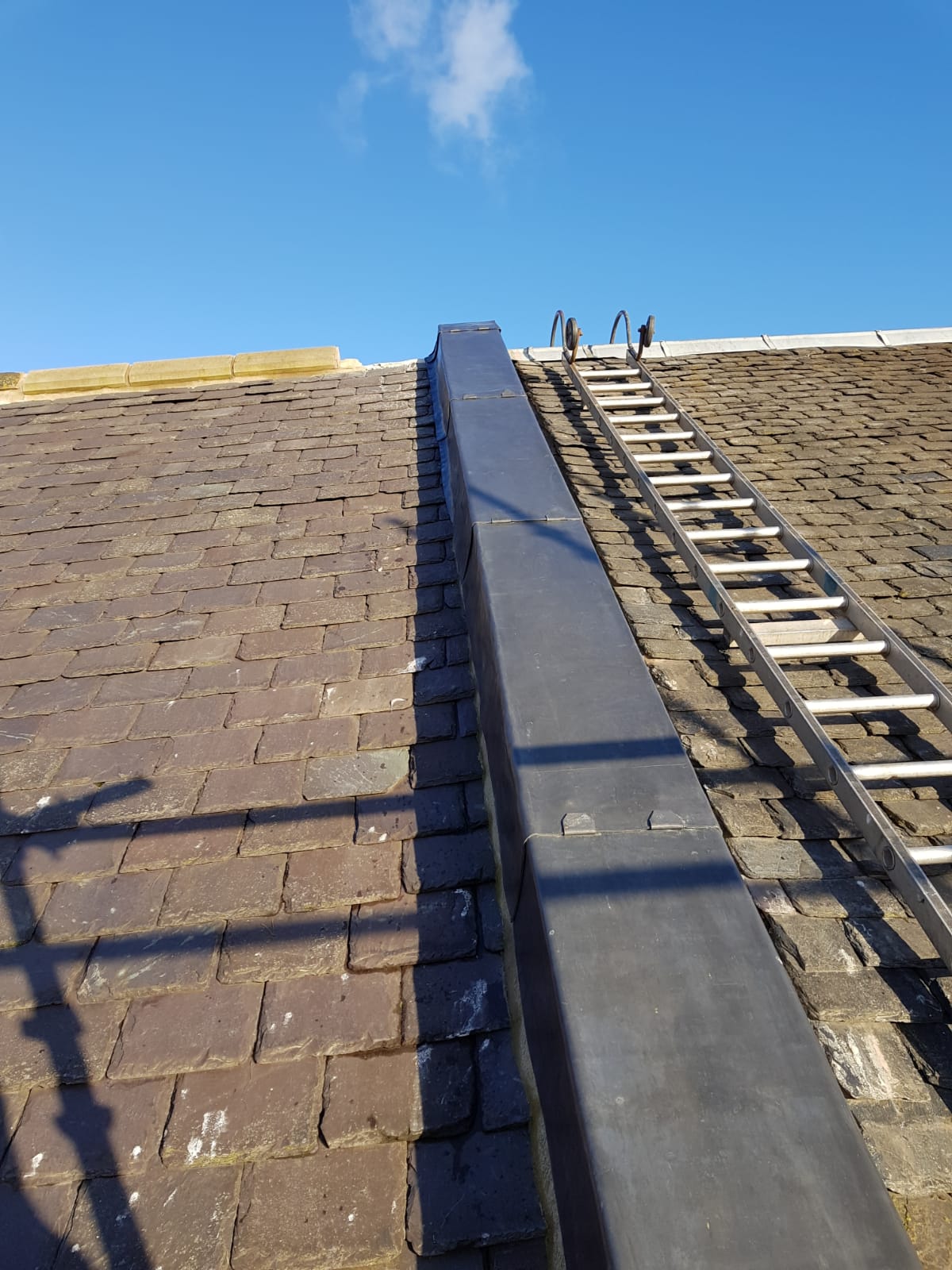
Cracked mortar haunching along the wall abutments was letting water into the building. As part of the lead flashing repairs, it was stripped out on every elevation and replaced with lead watergates and lead cover flashings.
- Leadwork
- Wall abutments
- Slate roof
- Water ingress
Project summary
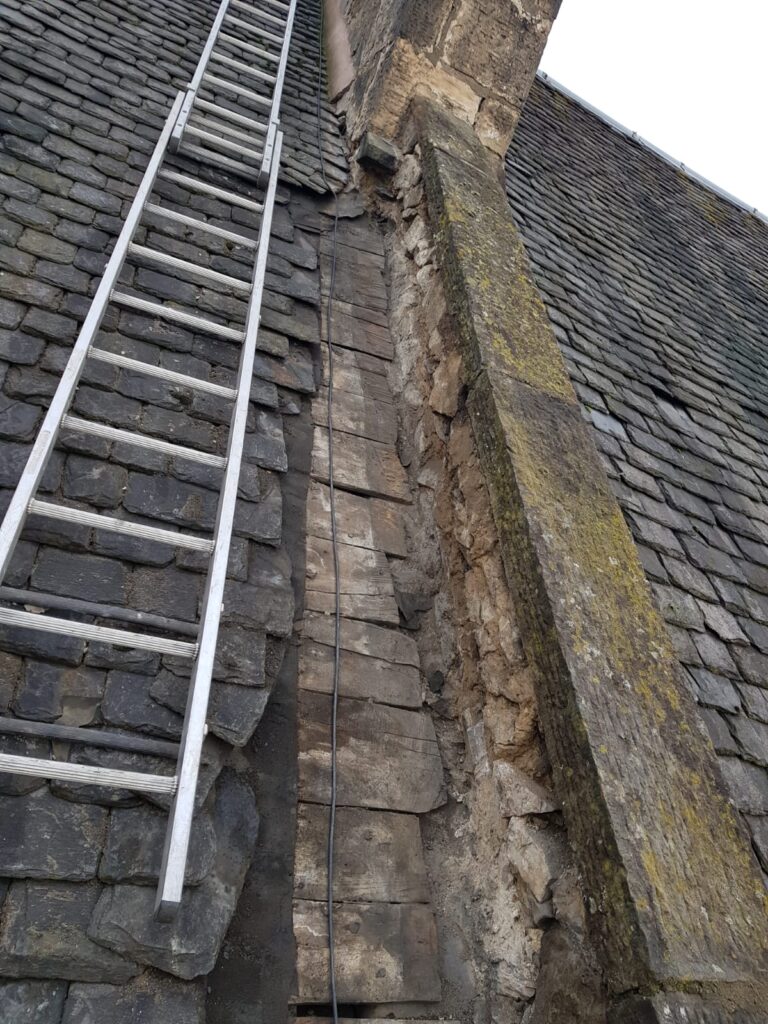
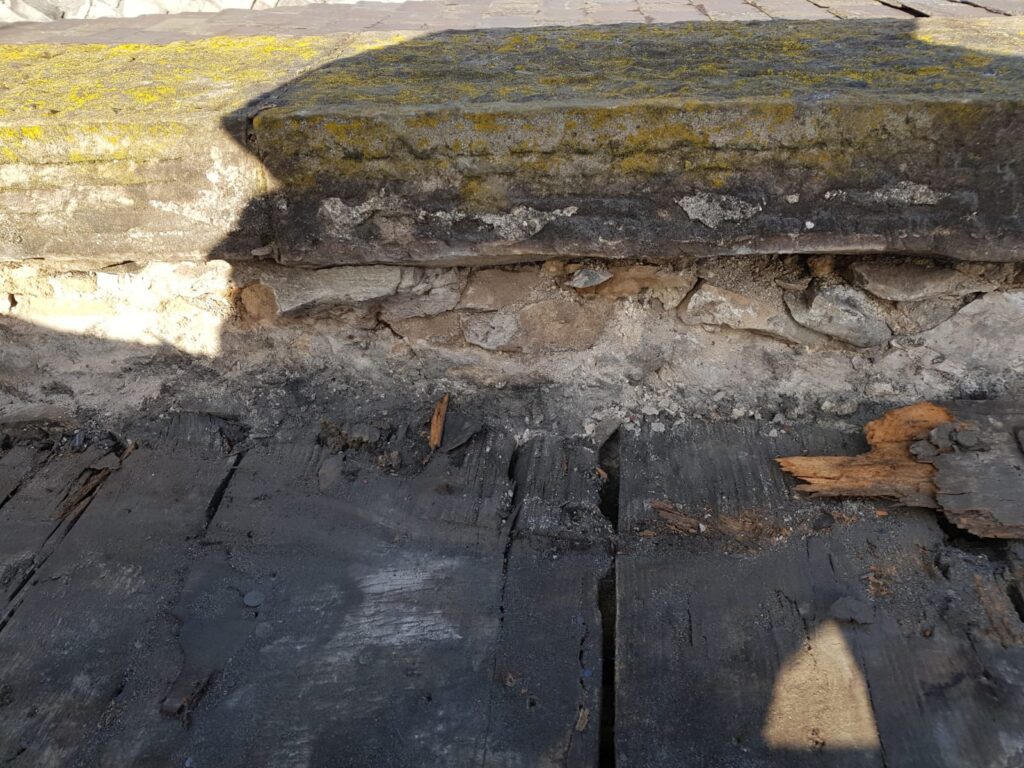
Where the slates met the surrounding stone walls, the joint was sealed with mortar haunching. Haunching cracks as the roof and walls move, and once it cracks, water runs straight down behind it into the building.
Rather than patch it again, the haunching was stripped out on all elevations and replaced with lead: watergates along each wall abutment, with lead cover flashings over them.
- Location
- Leith, Edinburgh
- Building
- Traditional stone building, slate roof
- Problem
- Cracked haunching at the wall abutments letting water in
- Access
- Scaffolding and roof ladders
- Work
- Haunching stripped out on all elevations; lead watergates and cover flashings installed
- Output
- Photos before, during and after
What the work involved
- Access. Scaffolding to the wallheads, with roof ladders on the slopes.
- Stripped out the haunching. The old mortar was removed along every wall abutment, on all elevations, not just where the leak was showing.
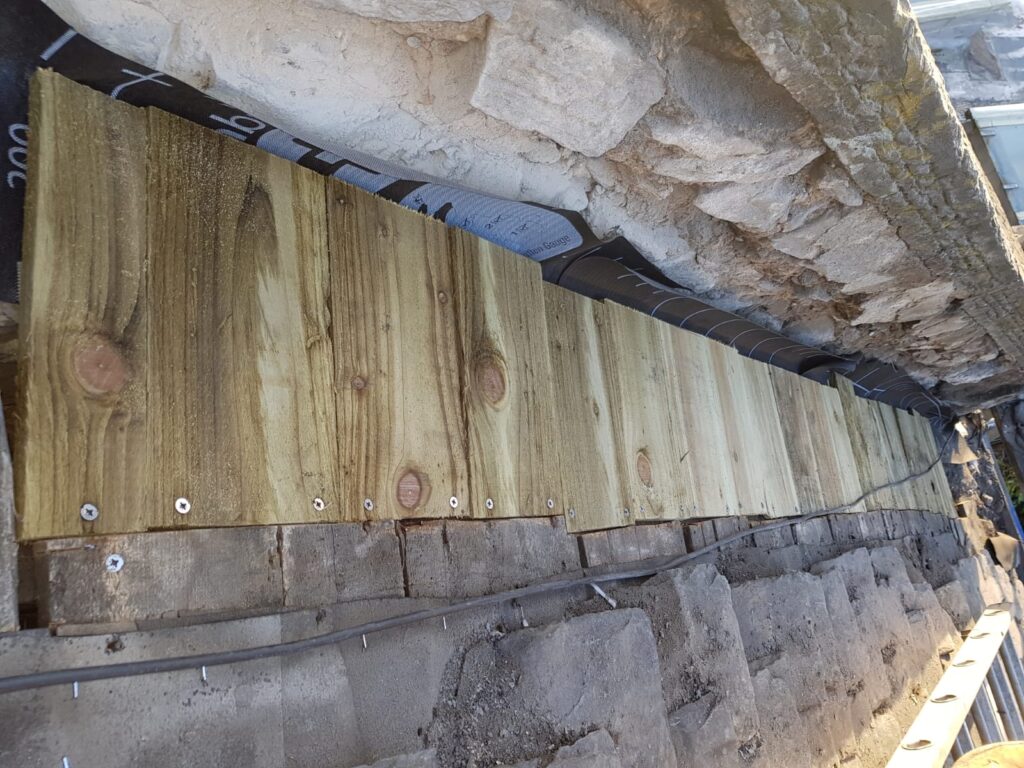
- Prepared the abutments. Slates were taken back along the walls and timber laid where needed to carry the new lead.
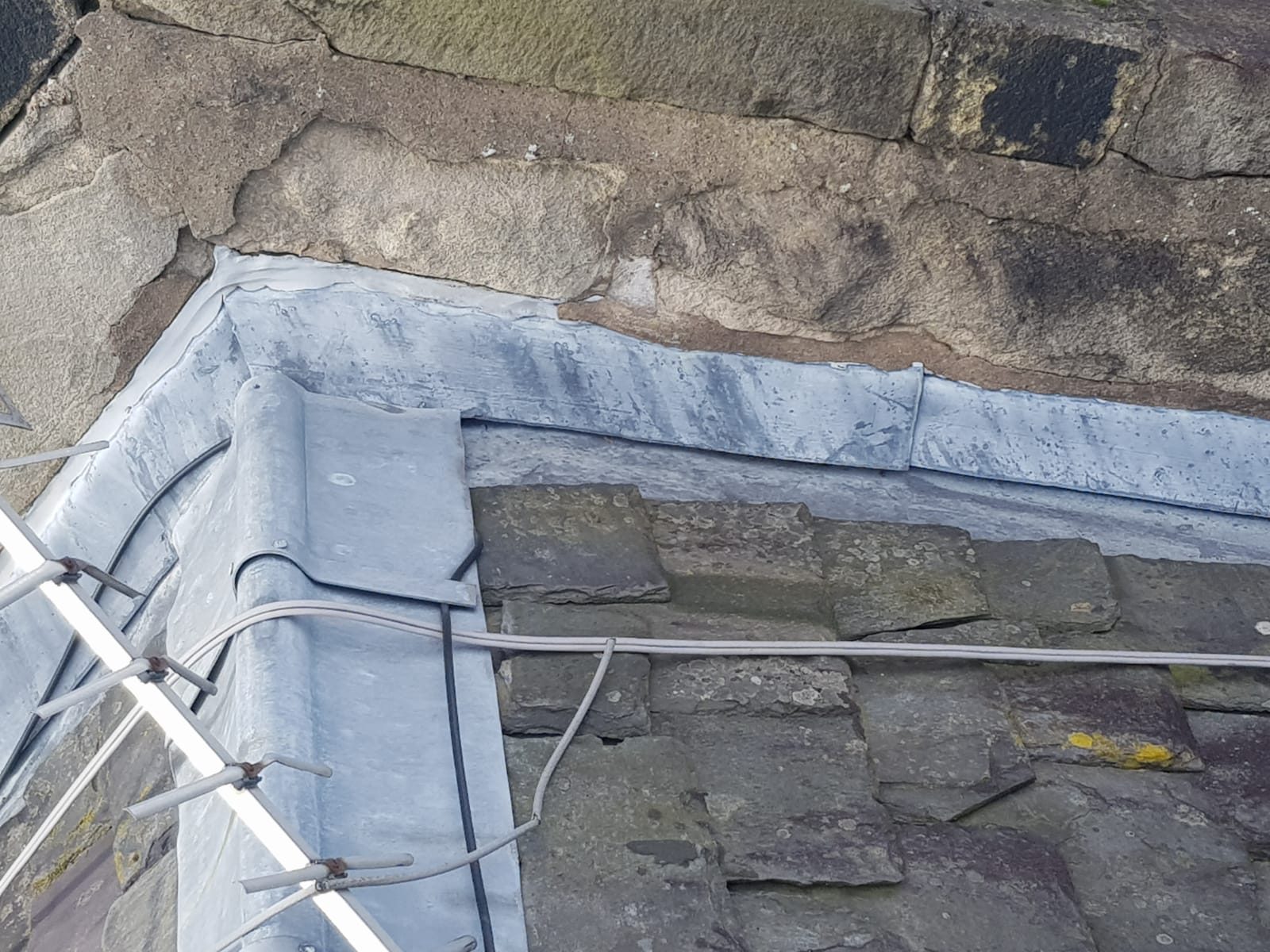
- Fitted lead watergates. A lead channel runs along each abutment, dressed under the slates, so water is carried down the roof instead of into the wall joint.
- Fitted lead cover flashings. Lead fixed to the wall and dressed down over the watergate, so water running off the wall lands on the lead.
- Photo record. The client received photos of the abutments before, during and after the work.
Before
During and after
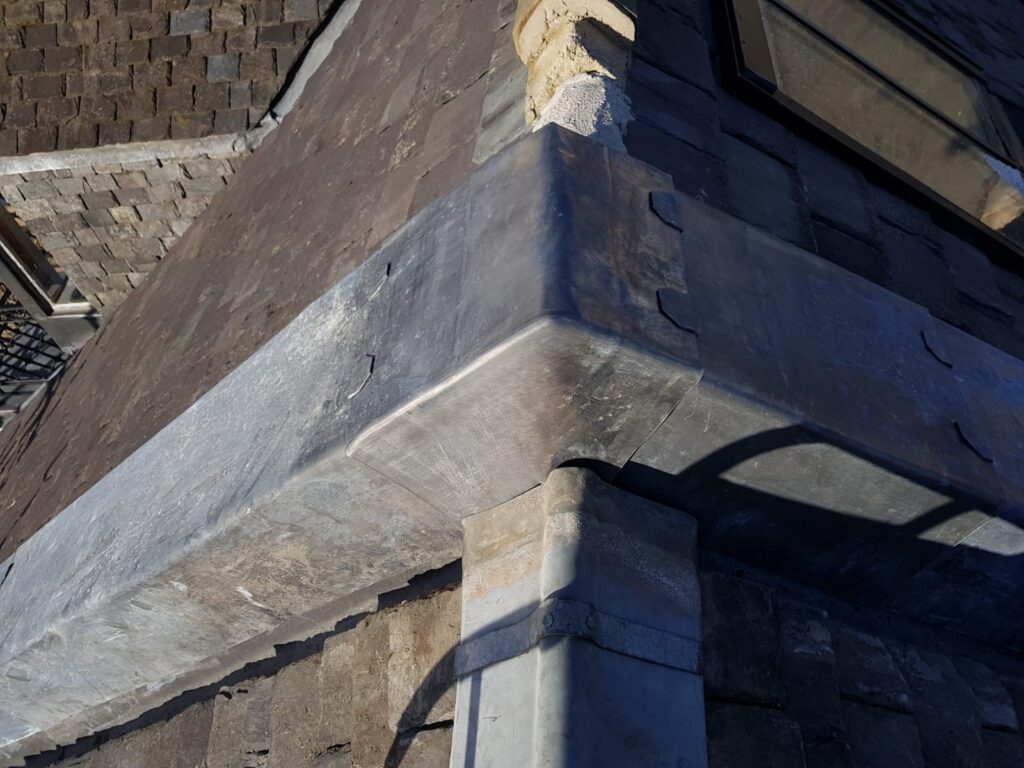
Lead flashing repairs vs new haunching
Haunching is a mortar fillet. It is quick to put in, but the roof and the wall move at different rates, so it cracks, and once it cracks water goes straight behind it. Re-pointing it buys time, but the same joint usually fails again.
A lead watergate and cover flashing let the roof and the wall move independently while keeping water out. Done properly, leadwork lasts for decades with little maintenance. Historic Environment Scotland’s Engine Shed has more on roofing leadwork.
Signs your wall abutments need attention
- Damp on a top-floor wall or ceiling next to a gable, party wall or chimney
- Cracked, loose or missing mortar where the slates meet a wall
- Moss or plants growing along the joint
- Leaks that show up during wind-driven rain
Related services
Water coming in where the roof meets a wall?
Send us the address, where the water is showing inside and any photos of the roof.