

Most roof leaks in Edinburgh start with something small: a rone full of leaves, a slipped slate, a split in the lead or a loose cope stone. Over a summer they do little harm. Once the autumn rain and the first winter storms arrive, the same defects let water into the building, and on a tenement that usually means the top-floor flats and the common stair.
A check before winter finds those defects while they are still small repairs. This guide covers what to look at, what you can safely check from the ground, and how to decide what needs doing now and what can wait.

Why autumn and early winter matter
- Blocked rones and outlets: leaves and moss build up over the year, and a blocked outlet sends water over the front of the gutter and down the stonework.
- Heavy rain: a small split in a lead valley or gutter that stays dry in summer can let in a lot of water in a downpour.
- Wind: storms lift slates that are already loose and can dislodge failing copes, pots and skew stones.
- Frost: water in open joints and saturated stone freezes and expands, which opens joints further and loosens pointing.
What to check before winter
A roof check should cover the parts of the building that carry water and the parts that could fall:
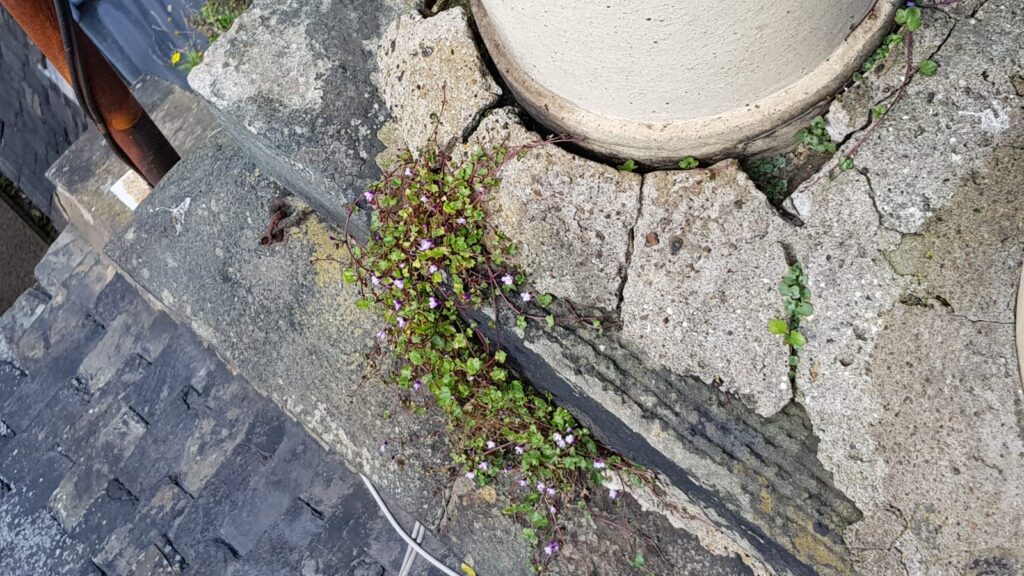
- Rones, outlets and hopper heads: cleared of leaves, moss and plants, with water running freely to the downpipes.
- Downpipes: no split joints or cracked sections, and no dark staining on the stone behind them.
- Slates: no slipped, cracked or missing slates, particularly around chimneys, dormers and rooflights.
- Valleys, lead gutters and parapet gutters: clear of debris, with no splits, lifted laps or open joints.
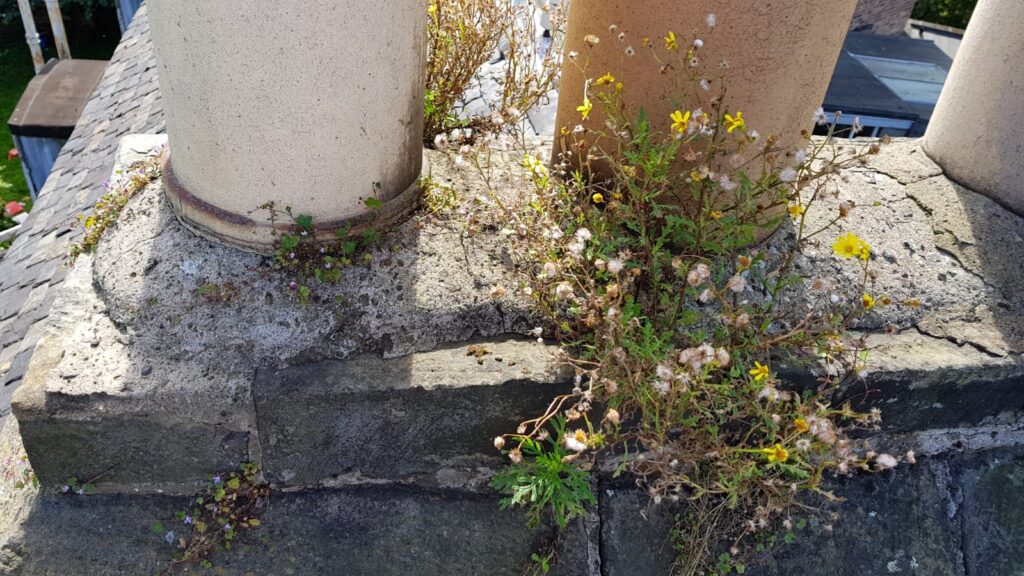
- Chimney heads: pots secure, haunching intact, copes and pointing sound, and flashings tight to the stone.
- Skews and copes: no open joints or stones that move when checked.
- Flat and platform roofs: outlets clear, no ponding, splits or lifted edges.
- Roof hatches, cupolas and rooflights: seals and flashings in good order.
Loose stone deserves particular attention on older sandstone buildings. Our guide to falling masonry in Edinburgh explains where it comes from and why a close-up check matters.
What you can check from the ground
Owners should not go onto a roof. From the street, the back green or a window, you can still spot most of the warning signs:
- water spilling over the front of a rone during rain
- plants growing out of gutters, hoppers or chimney heads
- green or dark staining on stonework below a gutter or downpipe
- slates or pieces of stone lying on the pavement or back green
- damp patches, stains or peeling paint on top-floor ceilings or in the common stair
If you see any of these, take a photo and note where it is. It makes it much easier to price a repair, often before anyone needs to visit.
What needs doing now, and what can wait
Not every defect needs fixing before Christmas. After a roof inspection we rank what we find in three groups:
- Urgent: anything letting water in now, or loose material that could fall. These should be dealt with straight away.
- Short term: defects that will get worse over the winter, such as a slipped slate next to a valley or a split joint in a rone.
- Planned: work that can be budgeted for, such as repointing a chimney head or renewing a section of lead.
That way owners and factors can deal with the urgent items first and plan the rest, rather than paying for everything at once.
Who arranges it in a tenement?
In most tenements the roof, chimneys, rones and downpipes are common parts, so owners share responsibility for maintaining them. Your title deeds set out how costs are shared. Where they say nothing, the Tenement Management Scheme fills the gaps. If your building has a factor, they will usually organise the check. If not, one owner can get a quote and share it with the others.
The City of Edinburgh Council’s Shared Repairs Service publishes free guidance for owners, including a leaflet on checking your building.
Reaching the roof
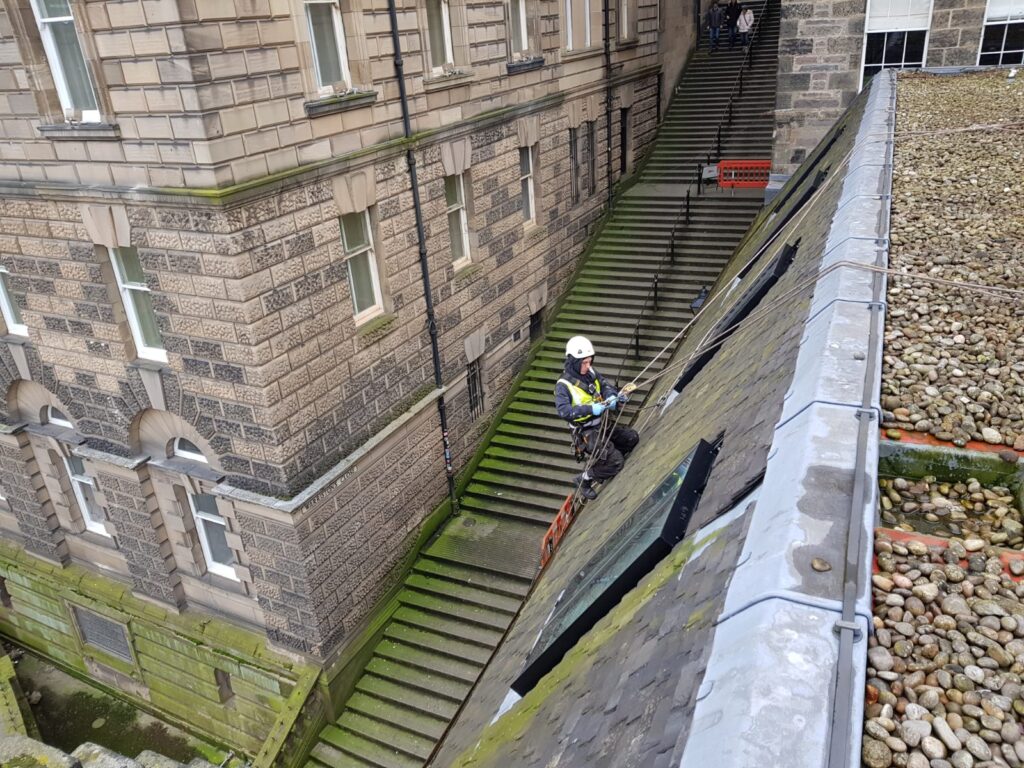
Many winter checks can be done from a roof hatch. Where they cannot, we recommend the most cost-effective way to reach the roof: rope access, scaffold or a mobile platform. Rope access often suits high rear elevations and roofs above back greens, where scaffolding a whole elevation for a check would cost more than the repairs.
Book a winter roof check
We can check the roof, clear rones and outlets, make small repairs on the day and send you a photo report with anything else ranked by priority. See roof maintenance and gutter cleaning, or request a quote and send us a photo. You can also call 0131 235 1019.