
When it’s time to plan a flat roof replacement, the
decisions you make now will determine how your roof performs for the next few
decades. A well-designed replacement can enhance your building’s protection,
improve insulation, and even provide additional usable space. On the other
hand, cutting corners or choosing the wrong system can lead to recurring leaks,
poor energy efficiency, and costly repairs down the line.At Valtor Roofing, we specialise in flat roof replacement in
Edinburgh, combining traditional roofing craftsmanship with modern materials
and proven techniques. Whether your property is a residential extension, a
garage, or a tenement building, the principles remain the same: preparation,
specification, and installation all matter equally.
Below are five essential considerations to guide you througha professional and long-lasting flat roof replacement.
1. Choosing the Right Flat Roof System
Not all flat roofs are created equal. The first and most
important decision during a flat roof replacement is choosing the correct
system for your property. Each roofing system offers its own benefits in
durability, flexibility, appearance, and cost. At Valtor Roofing, we commonly install the following systems
across Edinburgh and the Lothians:
Liquid-Applied Flat Roof Systems
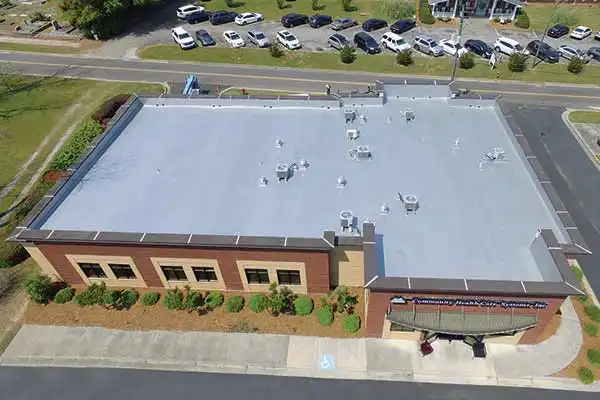
Liquid roofing forms a seamless waterproof membrane and can be applied directly over existing surfaces where suitable. It’s ideal for roofs with complex shapes, multiple penetrations, or hard-to-reach areas. The cold-applied process also makes it a strong choice for balconies and terraces.

GRP (Fibreglass) Roofs
GRP systems create a rigid, seamless finish that looks sharp and modern. They’re best suited for smaller, detailed roofs such as dormers, bay roofs, and porches, where precision and appearance matter. GRP roofs can be long-lasting when installed under suitable conditions.

Single-Ply Membranes (EPDM, PVC, TPO)
These lightweight systems are ideal for larger open areas such as commercial roofs or modern extensions. They are quick to install, low maintenance, and highly resistant to UV exposure. With fewer seams, there are fewer potential leak points, making them a reliable option for flat roof replacement work in Edinburgh’s climate.
High-Performance Felt (Bituminous Systems)
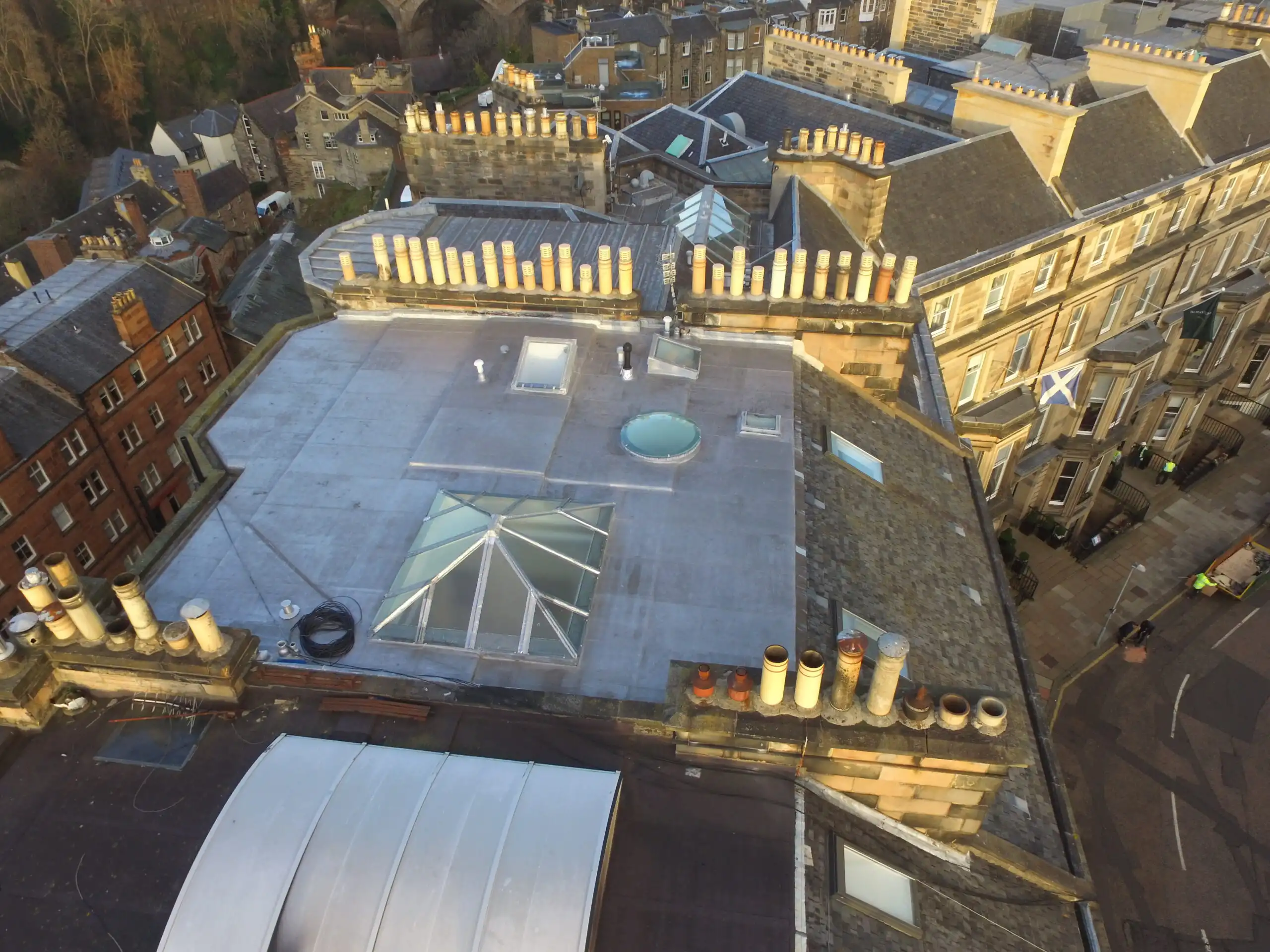
These multi-layered systems have been trusted for generations. Modern bituminous felt roofs use reinforced membranes and advanced adhesives to provide strong weather resistance. They’re cost-effective and particularly well suited to garages, tenement outbuildings, and home extensions.
When choosing a system, consider:
- The lifespan you expect (15, 25, or 40 years)
- Foot traffic and intended use
- Weather exposure, especially in Edinburgh’s variable climate
- Budget and maintenance expectations
A professional survey from Valtor Roofing ensures the flat roof system selected is the best long-term fit for your property.
2. Understanding How the flat Roof Will Be Used
Flat roofs can serve multiple purposes beyond keeping the rain out:
- Balconies and Roof Terraces
- Solar or Service Roofs
- Garages and Extensions
Access Routes
Even if the roof is only accessed for maintenance, reinforced walkways and safe access routes reduce accidental damage and extend the roof’s service life.
At Valtor Roofing, we design every flat roof replacement in Edinburgh around the property’s long-term use. If you plan to add solar panels or create future access routes, we build that into the design from day one to avoid disruption and extra cost later.
3. Assessing the Condition of the Existing Deck and Structure
Before installing any new flat roof system, it’s essential
to evaluate what lies beneath. Many roof failures stem not from the new
covering but from issues with the substrate or structural deck.
During a professional survey, our technicians inspect:
- Timber Decks
We check for rot, soft spots, deflection, and evidence of previous water ingress. A new covering on a compromised deck is a short-term fix at best. - Existing Insulation
We assess whether insulation can be reused, overlaid, or needs full removal. Wet or compressed insulation offers little thermal benefit and can contribute to persistent damp conditions. - Structural Supports
We check joists and support members, particularly if the replacement build-up changes the overall load (for example, thicker insulation, terrace finishes, or additional equipment). If the underlying structure is compromised, overlaying with a new system may only mask the problem. In those cases, partial or full deck replacement is often the correct approach.
Valtor Roofing provides detailed photo reports and clear
explanations before any flat roof replacement work begins. That transparency
helps you understand what’s required and why.
4. Warm Roof vs. Cold Roof Construction
One of the biggest design decisions in a flat roof replacement is whether the roof is built as a warm roof or a cold roof. The difference is where the insulation is placed, and that affects condensation risk, energy efficiency, and long-term performance.
Warm roofs are now the standard choice for most new and replacement projects because they reduce the risk of hidden condensation damage and improve thermal performance.
Side-by-side checklist: Warm roof vs cold roof
Check this before you decide | Warm roof (insulation above the deck) | Cold roof (insulation below the deck)
- Insulation position: Above deck, below waterproofing | Between/under joists, below deck
- Condensation risk: Lower (when the vapour control layer is continuous and sealed) | Higher (relies on ventilation and airtight ceilings)
- Ventilation requirement: Usually not to a roof void | Critical: ventilation paths must be designed and kept clear long-term
- Thermal performance: Stronger and easier to improve | Often weaker due to thermal bridging at joists
- Common failure mode: Poor detailing at outlets/edges; breaks in vapour control layer | Blocked vents and warm moist air leakage into void leading to rot and mould
- Best for: Most flat roof replacement projects in Edinburgh | Limited situations where ventilation can be proven and maintained
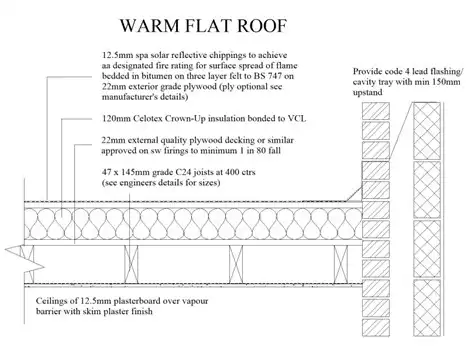
Warm Roof
In a warm roof build-up:
- Insulation sits above the structural deck, directly below the waterproofing layer
- A vapour control layer (VCL) is installed and sealed to manage moisture movement
- The structural deck stays warmer, reducing condensation risk
- It’s generally easier to achieve modern insulation targets
Cold Roof
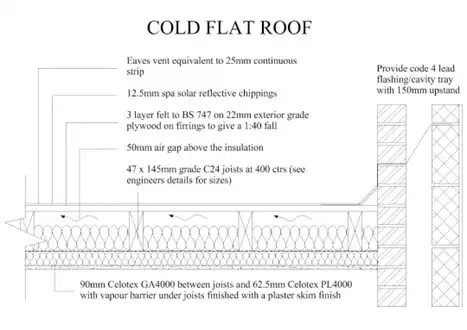
Cold Flat Roof
In a cold roof build-up:
- Insulation sits below the structural deck, often between joists
- The deck remains cold, increasing condensation risk
- Ventilation is required to remove moisture from the void
5. Drainage, Detailing, and Long-Term Maintenance
Key details we address during every flat roof replacement include:
- Falls and Ponding
The roof should be designed to direct water towards outlets or gutters. Standing water accelerates wear and can add weight to the structure. Where required, tapered insulation can be used to form correct falls and reduce ponding. - Upstands and Thresholds
Perimeter details such as parapets, wall abutments, rooflights, and door thresholds must be raised correctly above the finished roof surface. Poor upstand design is one of the most common causes of leaks, especially during wind-driven rain. - Outlets and Gutters
We assess outlet size, placement, and capacity, and we often upgrade older drainage details to improve reliability. Where appropriate, overflow provisions can help reduce internal flooding risk if an outlet blocks. - Future Maintenance
Access should be considered during design. If the roof will be accessed for maintenance, we plan safe routes and protective finishes to reduce accidental damage.
Additional Factors to Consider when replacing your flat roof
Beyond the five core considerations, a few additional points
can significantly influence the outcome of your flat roof replacement:
- Building Standards and Insulation Upgrades (Scotland)
Depending on the scope of works, a building warrant may be required, particularly where the works go beyond straightforward maintenance or involve upgrades to insulation and the roof build-up. Valtor Roofing will advise you at survey stage on what is likely to apply and ensure the specification aligns with current Scottish Building Standards expectations. - Energy Efficiency and Sustainability
Modern flat roof replacement options can include higher-performance insulation, reflective membranes, and systems that support future upgrades such as solar. These measures can improve comfort and reduce heat loss, particularly on extensions and top-floor spaces. - Guarantees and Aftercare
Every flat roof replacement we complete is backed by a clear guarantee for materials and workmanship. Ongoing inspections and preventative maintenance help extend the life of the roof and protect your investment.
If your existing roof is showing signs of ageing—cracks, bubbling, leaks, or ponding water—now is the time to act before minor issues
escalate into structural damage.
Contact Valtor Roofing today to arrange a detailed roof survey and consultation. We’ll assess your property, explain your options clearly, and provide a free, no-obligation quotation for your flat roof replacement.
Protect your property with service, safety, and quality — the Valtor Roofing way.
A professional flat roof replacement in Edinburgh will restore your property’s integrity, improve insulation, and give you peace of mind for years to come.
Why Choose Valtor Roofing for Flat Roof Replacement in Edinburgh?
Replacing a flat roof is more than a repair. It’s an investment in your property’s safety, energy efficiency, and long-term value. With so many systems, materials, and technical details involved, you need a contractor who can deliver quality workmanship and straight advice.
At Valtor Roofing, our reputation is built on:
- Detailed inspections and transparent reporting
- Conservation-compliant methods for heritage properties
- Fully qualified and insured roofers trained in modern flat roofing systems
- Premium materials supplied by trusted UK manufacturers
- Customer-first service, from quotation to completion