

Project
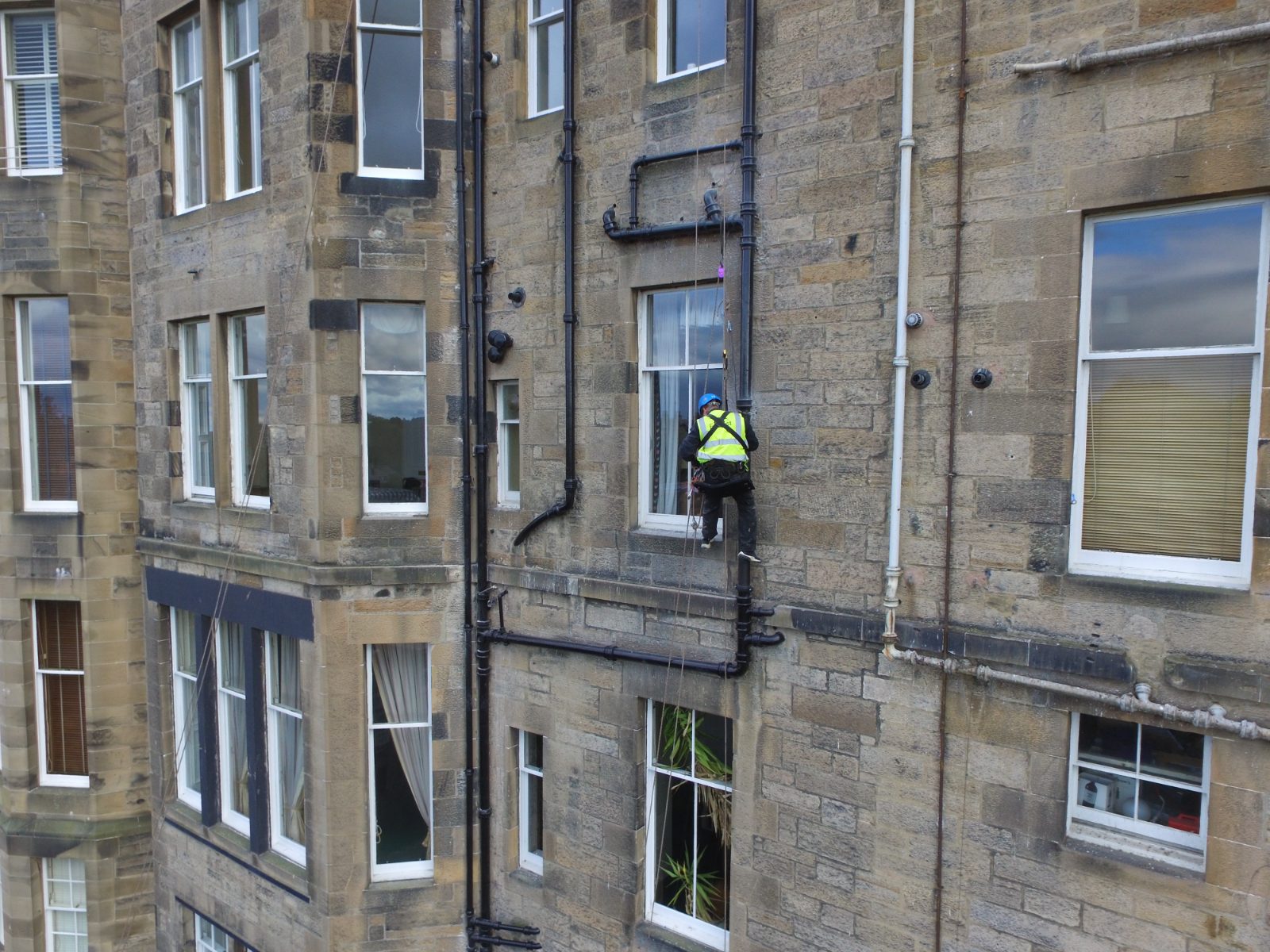
Rope access inspection of a tenement rear elevation, Rothesay Terrace
A tenement rope access inspection of the downpipes, gutters, windows and stonework on the rear of a West End building, with no scaffolding.
- Tenement
- Rope access
- Inspection
- Cast iron rainwater goods
Project summary
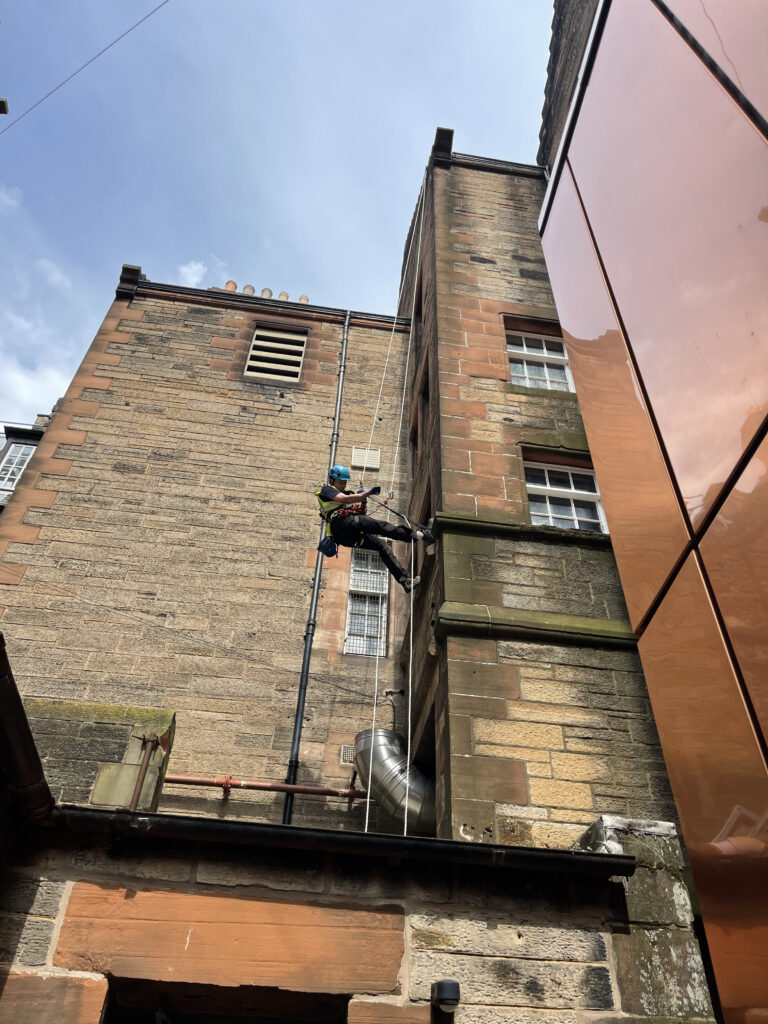
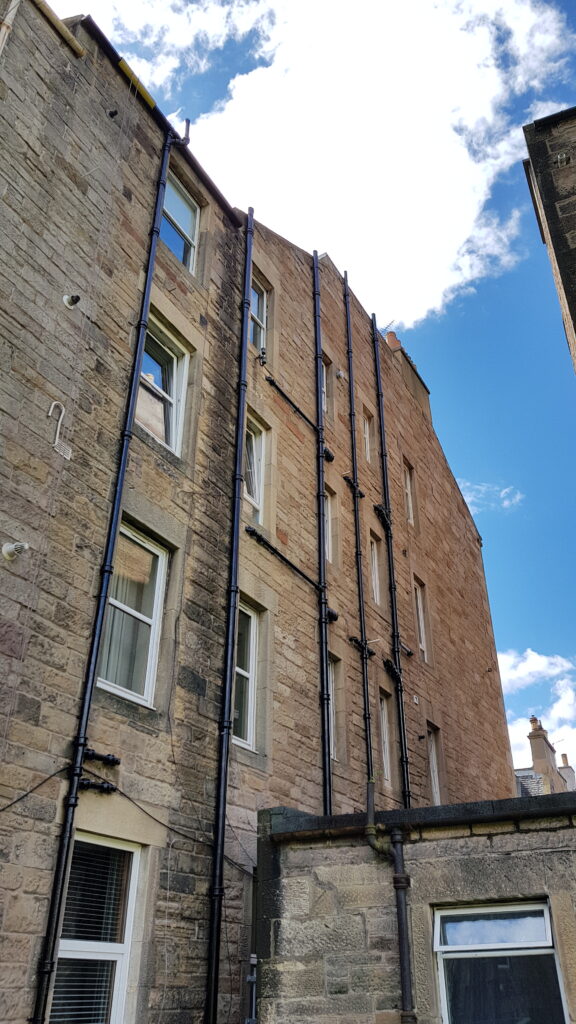
The rear elevation was inspected using tenement rope access, working down each drop alongside the downpipes, gutters, windows and stonework.
Most of what fails on a tenement rear elevation cannot be judged from the back green. Joints, collars and brackets on cast iron downpipes need to be seen from arm’s length, and that is where the problems were.
Every defect was photographed at close range so the client could see the condition of the rainwater goods before deciding on repairs. That is the main advantage of tenement rope access for an inspection: the technician is close enough to touch every joint, rather than judging it from the ground or through a camera zoom.
- Location
- Rothesay Terrace, West End, Edinburgh
- Building
- Stone tenement, rear elevation
- Access
- Tenement rope access, no scaffolding
- Scope
- Downpipes, gutters, wallhead, windows and stonework
- Date
- August 2018
- Output
- Close-range photographs of each defect
What we found
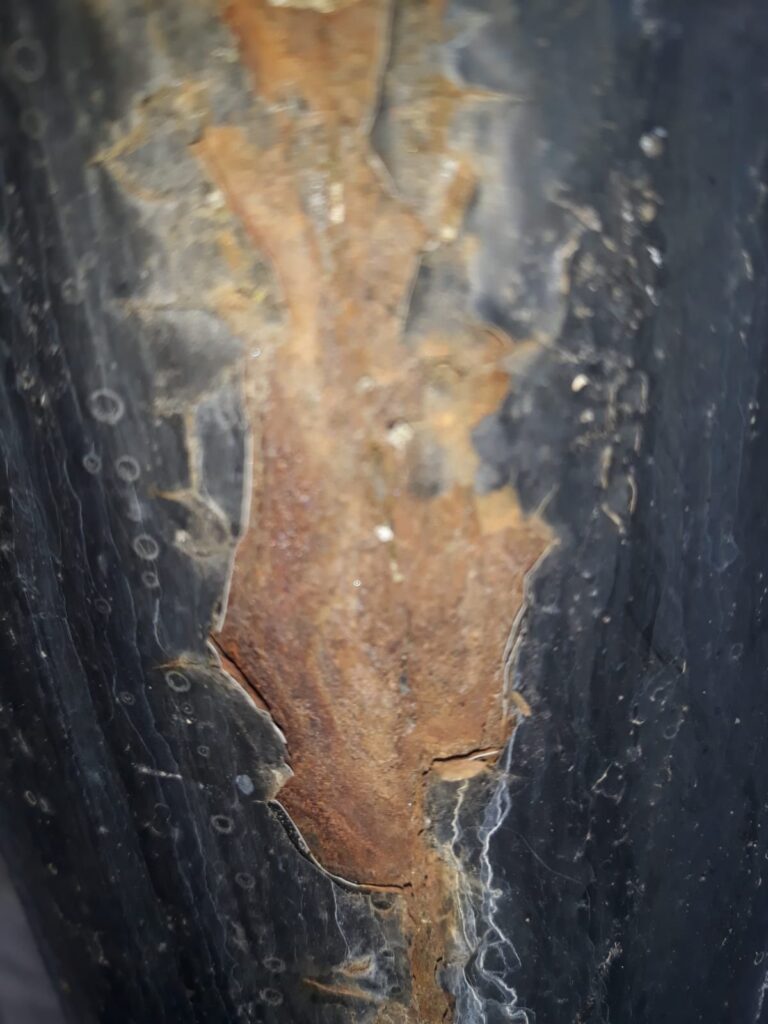
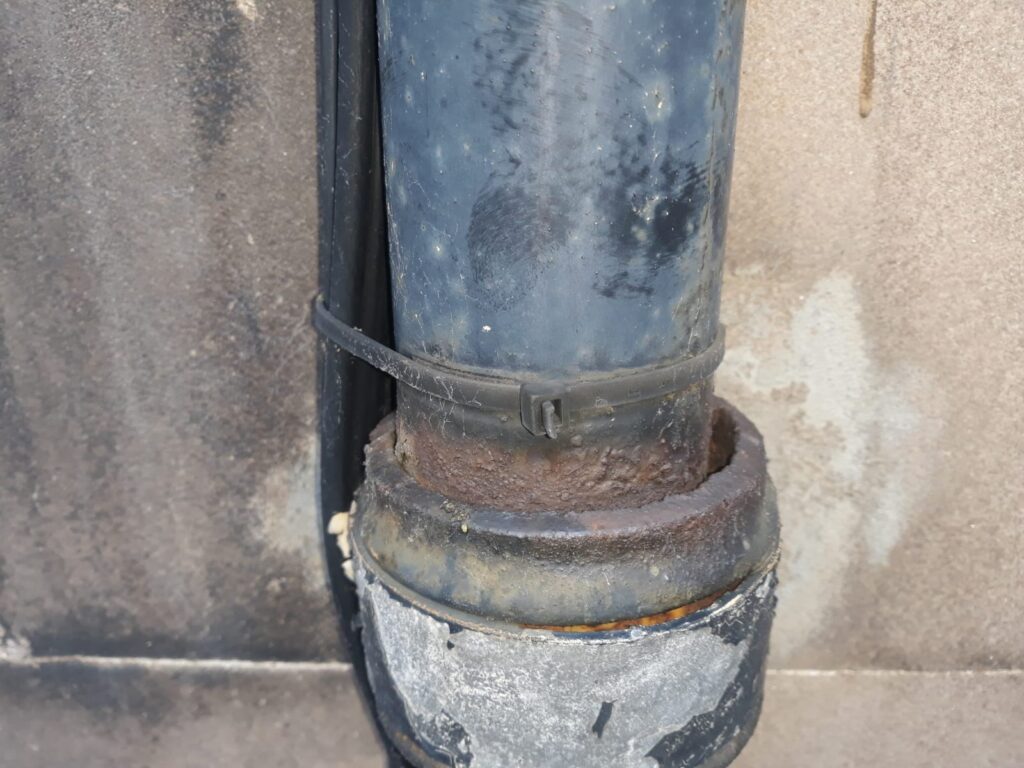
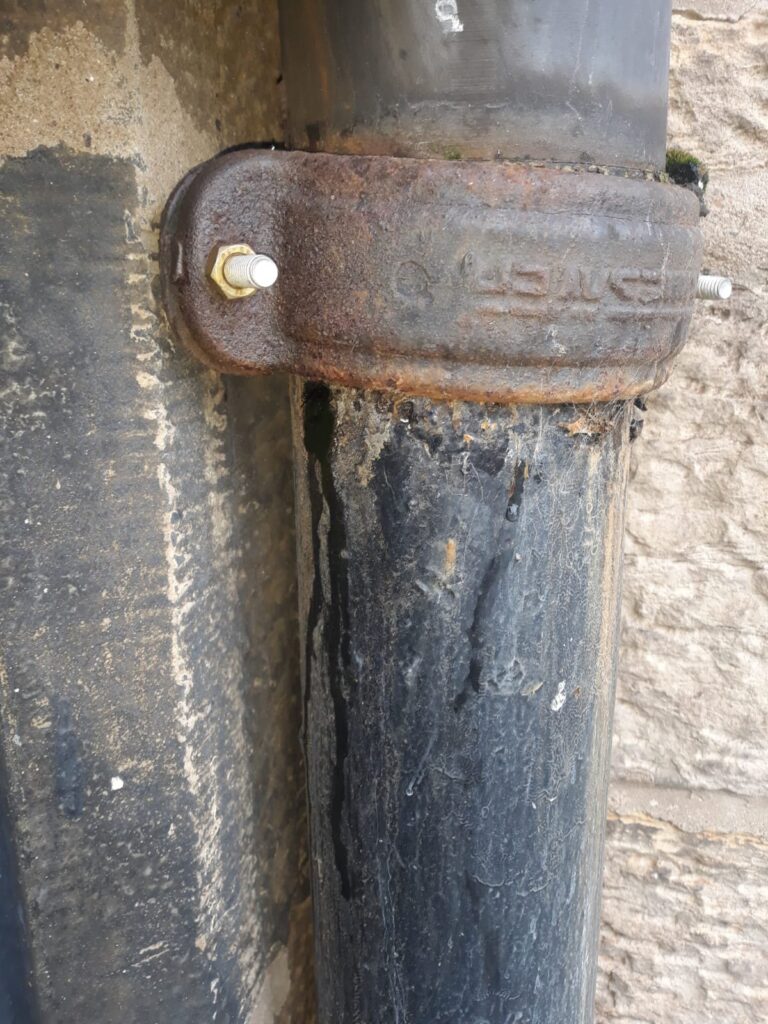
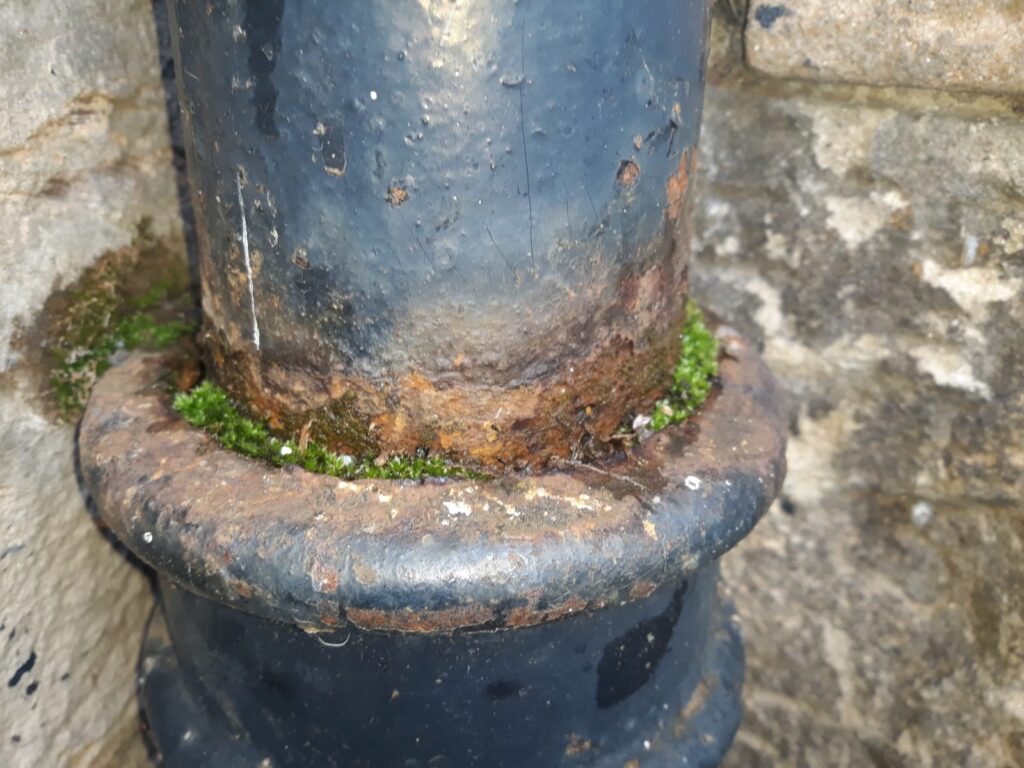
- Corroded joints and collars on the cast iron downpipes
- Split pipe sections leaking down the face of the building, leaving rust staining on the stone
- Corroded brackets
- Vegetation growing from a downpipe socket, where water and debris were sitting in the joint
How the elevation was inspected
On an inspection like this, each drop is worked from the wallhead down: the gutter and outlet first, then every downpipe joint, bracket and socket, followed by the window heads and cills and the stonework either side of the pipes.
Where something can be checked by hand, such as a loose bracket or a cracked socket, it is. Each defect is photographed close up so that whoever prices the repair, or the factor sharing the findings with owners, can see exactly what was found without another visit.
Why tenement rope access instead of scaffolding
Scaffolding the full rear elevation of a tenement for an inspection would cost far more than the inspection itself, and would sit in the back green for the duration.
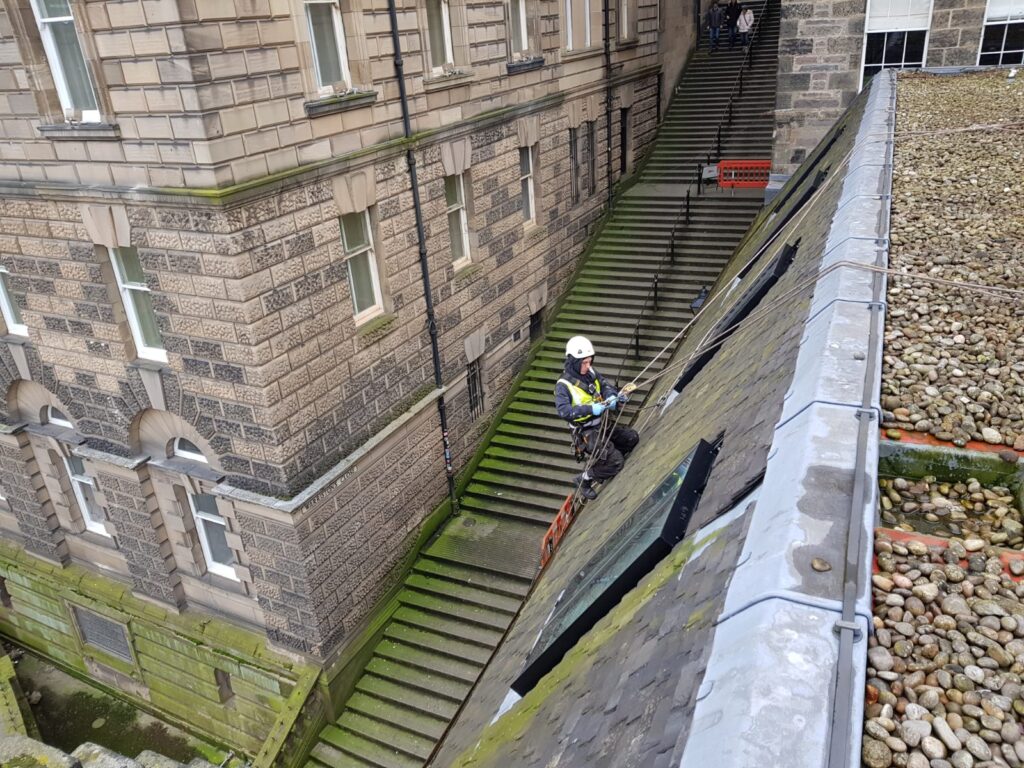
Tenement rope access put a technician beside every downpipe, joint and window on the elevation, with nothing left on the building afterwards. If the photos show a repair is needed, it can be priced accurately before anyone commits to access.
Typical repairs after an inspection like this
Defects like these are usually dealt with by replacing cracked lengths of downpipe in matching cast iron, remaking failed joints, refixing or replacing corroded brackets and clearing blocked sockets and hoppers. Once the rainwater goods are sound, the cast iron is prepared and repainted to slow further corrosion. Most of this can be done from the same ropes used for the inspection. Where a factor is managing the repair, the photographs can be shared with all the owners so the scope and cost are agreed before anyone is back on site.
Historic Environment Scotland publishes guidance on maintaining traditional buildings, including how to look after gutters and downpipes on stone buildings.
Related services
Worried about downpipes on the back of your tenement?
Send us the address and a photo from the back green if you can. Factors can include access details and we will arrange an inspection.