

Project
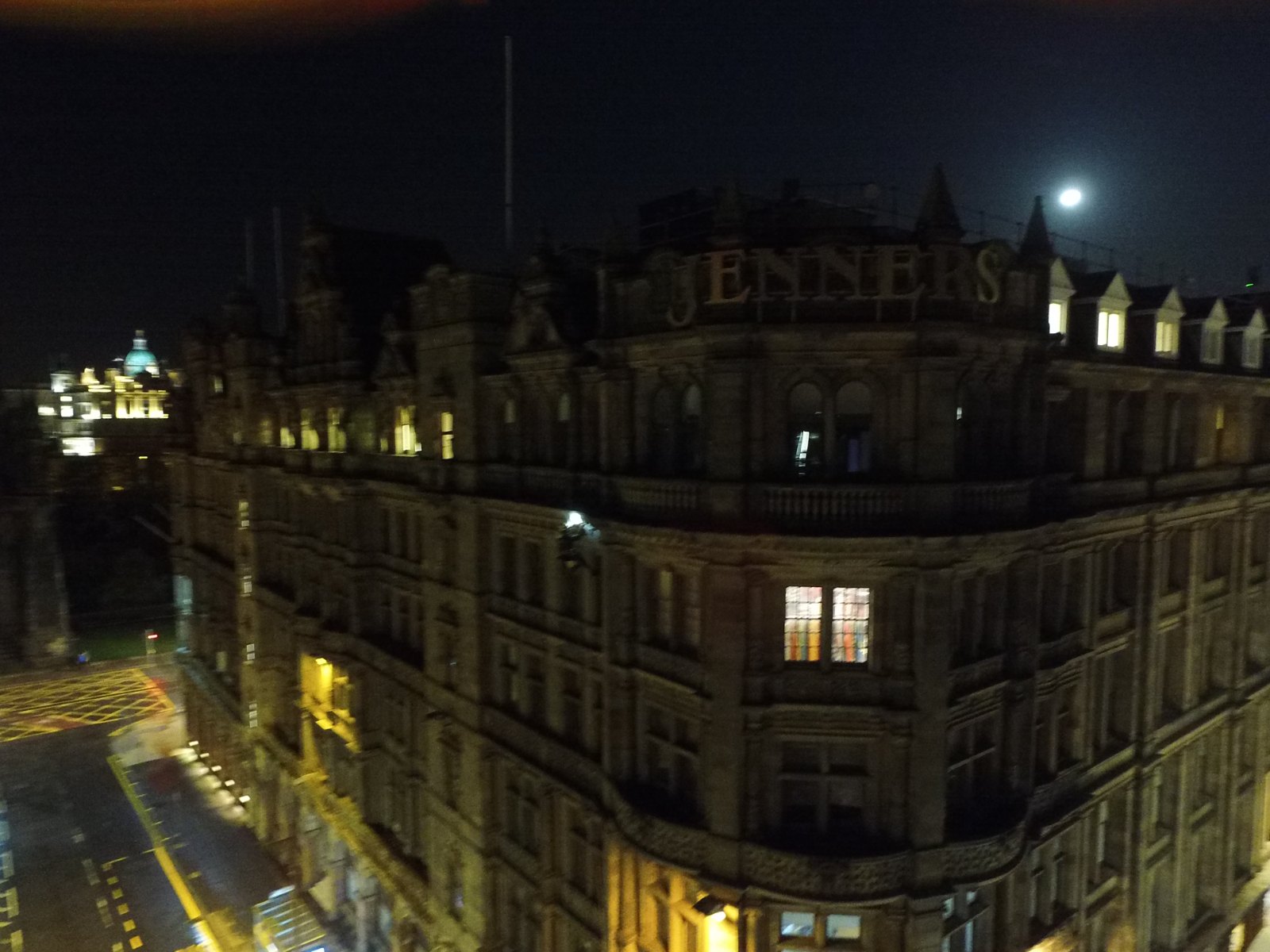
Rope access inspection and make-safe at Jenners, Princes Street
A full-building rope access inspection and make-safe of the Jenners building, carried out overnight to keep clear of daytime foot traffic on Princes Street.
- Commercial building
- Rope access
- Inspection and make-safe
- 15 working nights
Project summary
The first visit was a screening rope access inspection to give the client an overview of the masonry, roof and gutters. From ground level, nothing loose or damaged could be seen. Up close, the condition was much worse.
We reported back to the client and agreed to return for further nights to inspect the whole building and make it safe.
Princes Street has heavy foot traffic through the day. Working overnight meant the controlled area below the ropes could be kept clear with far fewer people passing underneath.
- Location
- Princes Street, Edinburgh
- Client
- Facilities management contractor
- Building
- Sandstone commercial building with extensive carved and ornamental detail
- Elevations
- Princes Street, St David Street, Rose Street
- Access
- Rope access, night shifts
- On site
- 15 working nights, September to November 2019
- Output
- 30-page photographic inspection report
What the rope access inspection found
- Sugaring, blistering and delamination of the sandstone, worst directly under the balcony projections, where moisture and algae were keeping the stone wet
- Failed pointing on all three elevations
- Old cement repairs that had cracked the surrounding stone or come loose
- Lead valley gutters on the upper level blocked with debris and vegetation
- Loose, slipped and missing slates
- Bird spikes coming away because of the adhesive used to fix them
The work
Screening inspection
An initial overview of the masonry, roof and gutters, reported back to the client.
Full inspection
A full rope access inspection of every elevation at close range, including the ornamental figures, slate roof areas and glazing.
Make-safe
Loose stone, failed repairs and loose slates removed by hand and lowered. Valley gutters cleared.
Report
A photographic report of the findings and the items removed, with recommendations.
Make-safe
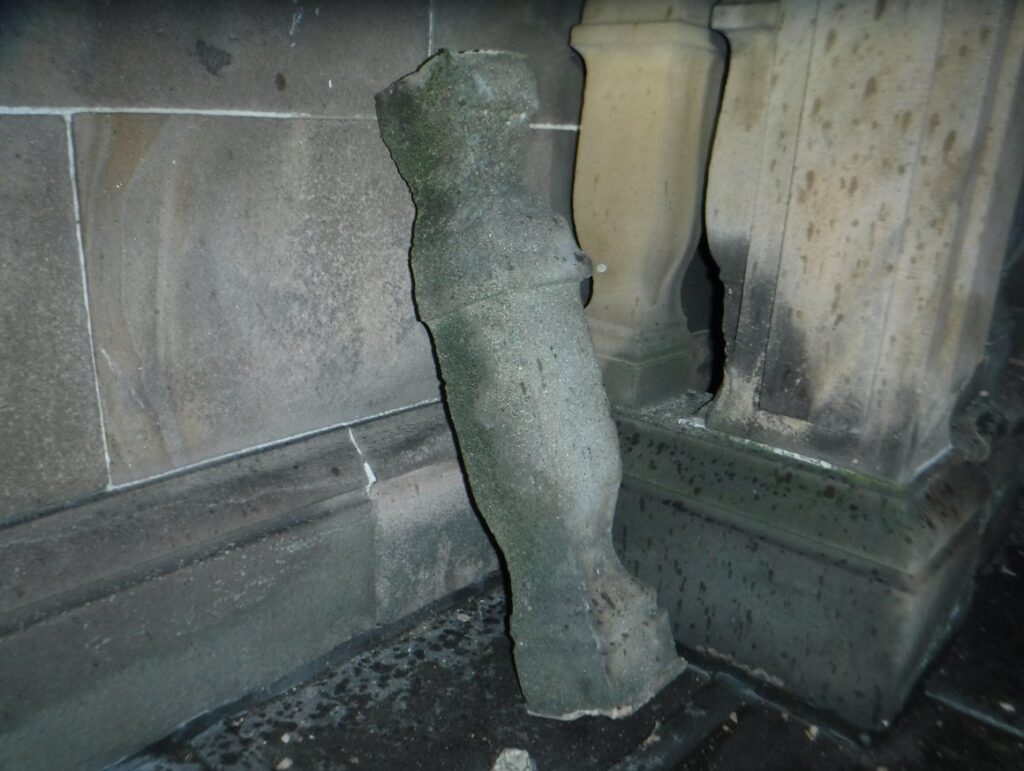
A significant quantity of loose stone and debris was brought down over the course of the work.
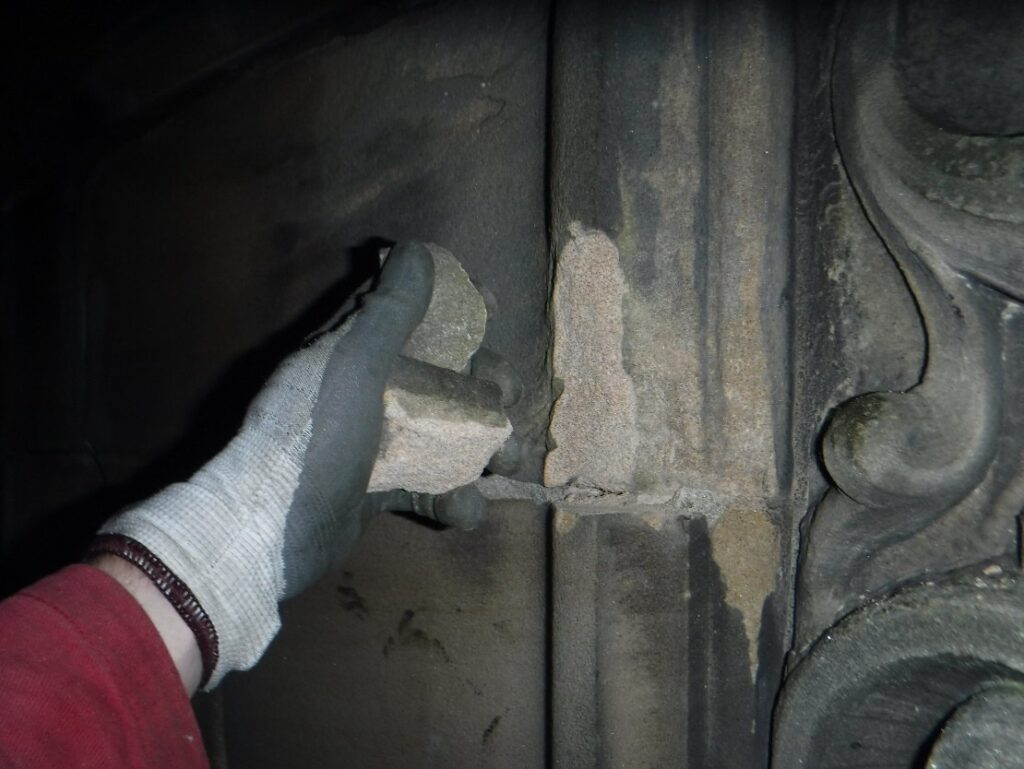
- Loose laminations, failed repairs and loose sections of cornice taken off by hand and lowered
- The largest item, a balustrade section of around 5 kg, recovered from 15 m above the pavement. Other balustrades on St David Street had slight movement
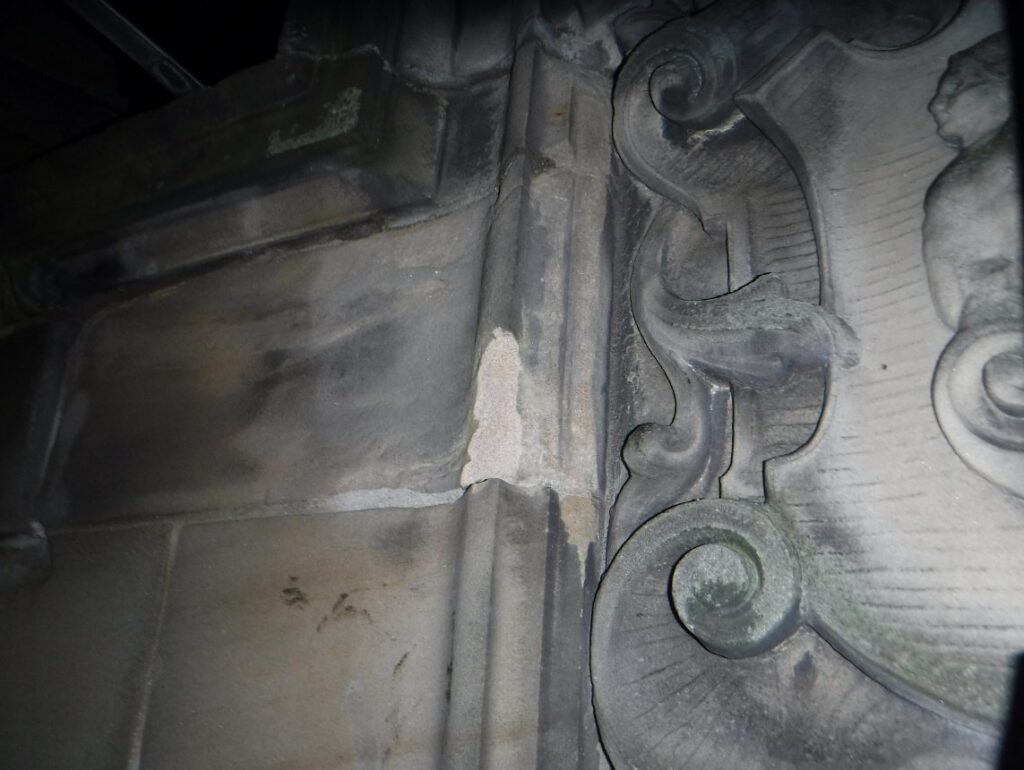
- Spalling close to coming away tooled back to sound stone
- Loose slates removed and valley gutters cleared
By the final night, every loose item found had been removed or made safe.
Before and after
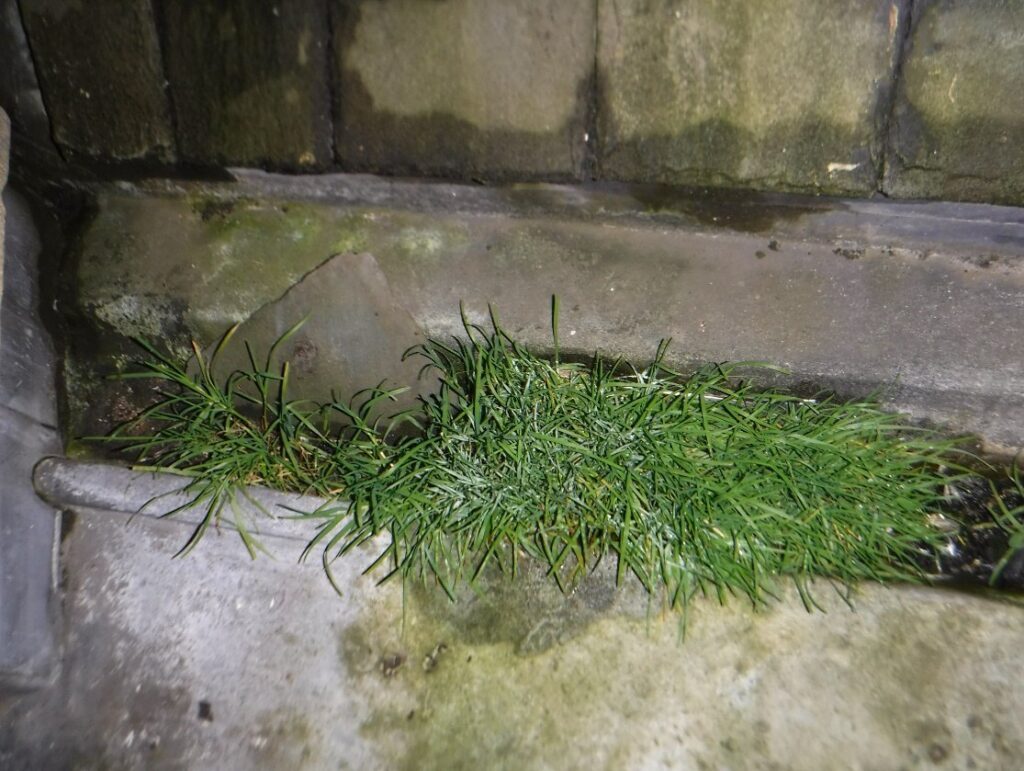
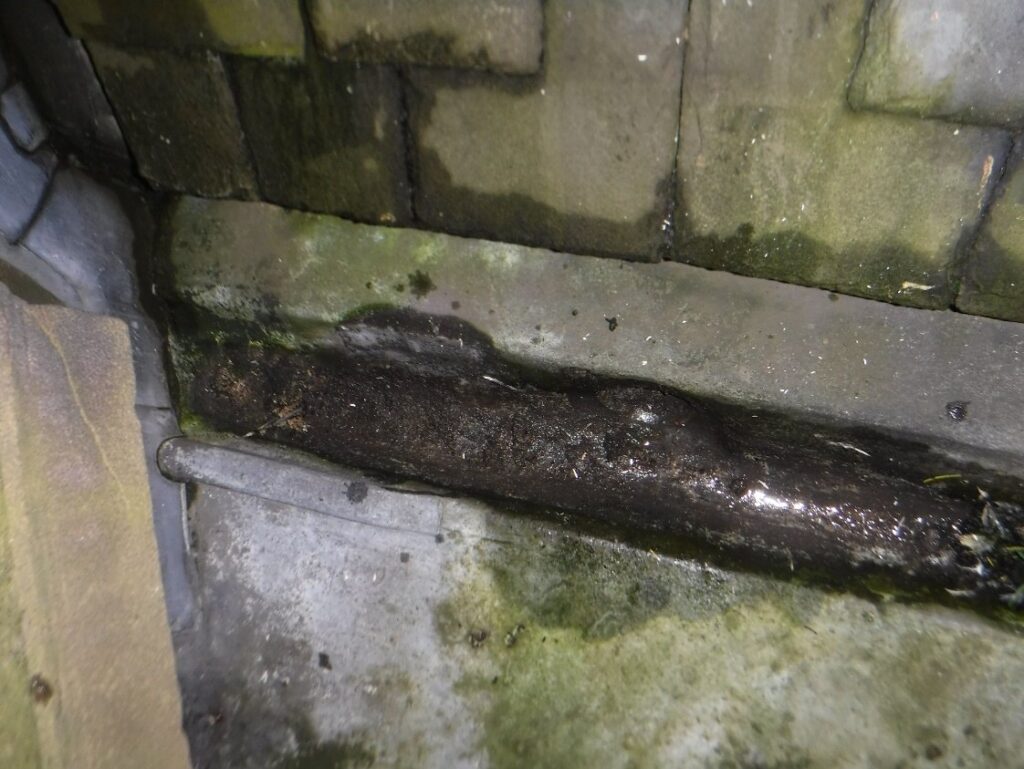
Recommendations to the client
- Annual inspection and maintenance, so small defects are dealt with before they become a risk to the street below
- Tooling back the remaining spalling to sound stone
- A different fixing method for the bird spikes
On a building of this age, defects at height rarely show from the street. Historic Environment Scotland publishes guidance on maintaining traditional buildings, covering stonework, gutters and roofs, and regular close inspection is the most practical way to keep on top of it. A rope access inspection gives that close look without scaffolding a whole elevation.
Related services
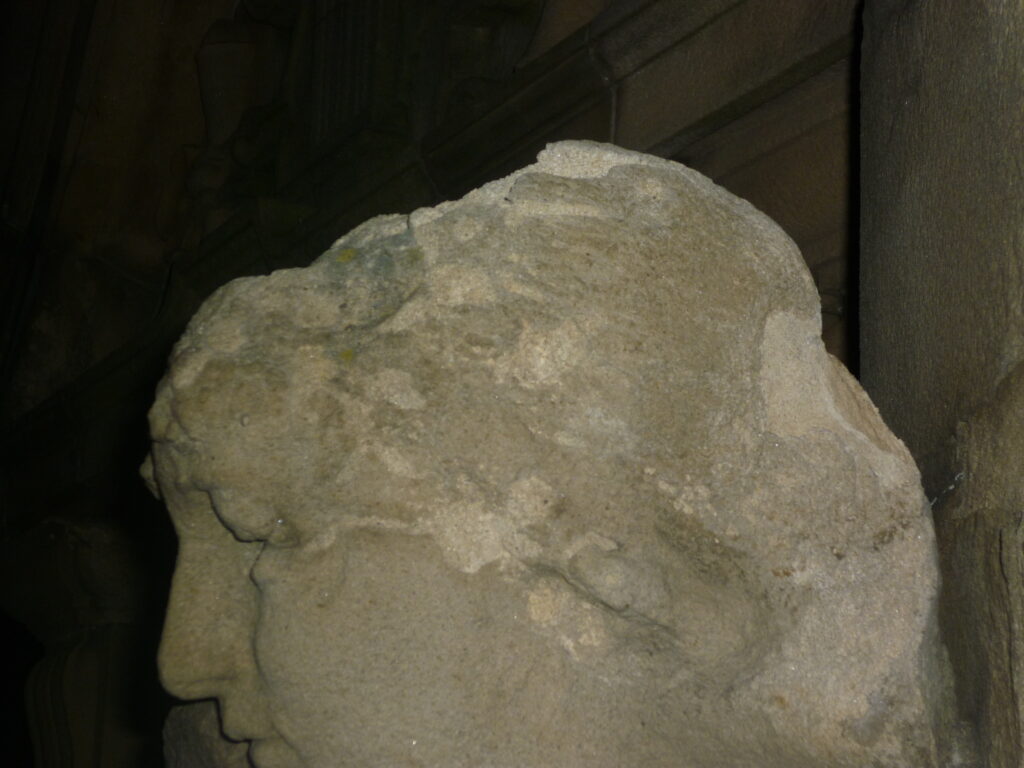
Rope access building repairs
Loose stone, failed pointing and facade repairs without scaffolding.
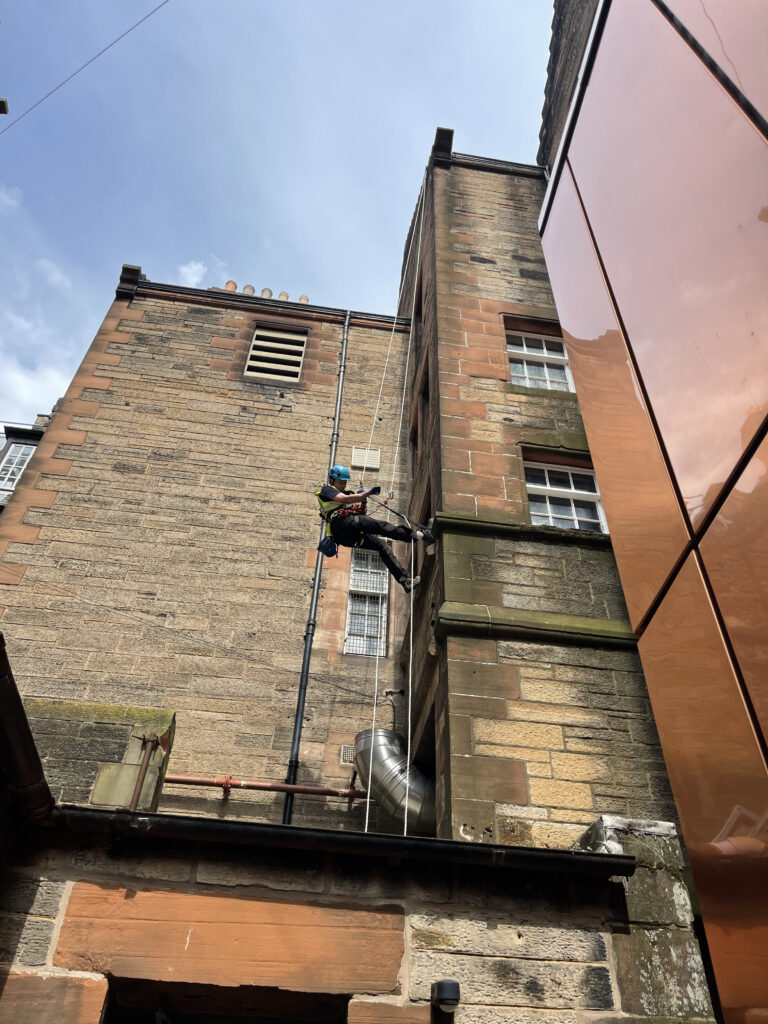
Building inspections
Close-range inspections with photos and defects ranked by urgency.
Concerned about loose stone on a facade?
Send us the address and what you have seen. On commercial buildings we plan the work around opening hours and foot traffic.